Thursday, 9 September 2021

Directional Control Valves Explained

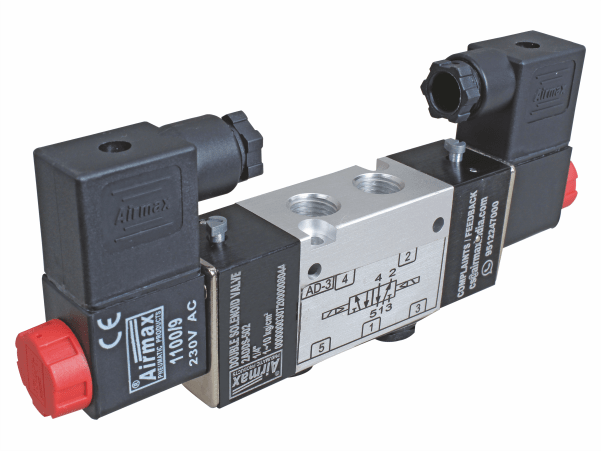
Pneumatic directional valves area unit utilized to start, stop, or primarily amendment the bearing of the breeze stream as incontestible by the requirements in stuffed air structures. Compacted air {is utilized |is employed|is used} by totally different relationships for operating their gear and mechanical gatherings that area unit utilized in their creation cycle. 


To see however the directional control valve supplier is employed, it's essential to understand the varied sorts of directional valves open searching. 


Directional Control Valves area unit traditional for an associate assortment of utilization, affiliations might utilize a solitary variety of valves for a selected enterprise, or they'll utilize a mix of various sorts of Directional Control Valves to try to do a particular job. 


These plans are isolated into plans, almost like a spool, slippery seal, poppet, stomach, and turning. Out of those plans, the poppet valve and also the spool area unit are the foremost by and huge saw ones. 


Spool Directional Control Valve 


The spool valve is of 2 types, lapped and supported. 


Lapped spool Directional Control Valve is relied upon to administer shoppers the stream set up that they have in by a protracted shot the bulk of the applications. The low extent of outdoor power is required for moving amicability and this nature of the spool works thereon to have an effect on the pool. 


Additionally, throughout a moving stroke, the spool is needed to remain reliable. This works thereon for the spool valve to end the stroke befittingly once the unquestionable is taken out. 


Upheld spool Directional Control Valves are part of an associate elastic bandage seal that pushes against the strain to ensure repair. they're relied upon to be utilized in 3, position-based applications and award you to upset the breezy that comes from the exhaust once the stream style is modified. 


They are soil tolerant and once faithfully lubed up, will continue going for a protracted time to come back. 


The two kinds of spool valves area unit open in three and 4-manner plans. A 3-way spool valve will in like means be utilized as a 2-course spool primarily by preventing one port. 


Booked repairs are that the best thanks to contending with a guarantee that your Directional Control Valves work on their best. allow North American countries to visualize a chunk of the items you'll do to ensure their impeccable execution. 


You should set up the help and oil to ensure that the valve is in its ideal condition. The individual in charge of facilitating needs to have pleasant data and need to follow the dates and assignments performed on the valve. 


Airmax Pneumatics Ltd may be a primary Directional Control Valve producer and businessperson in India. they're associate overall businessperson of gas instrumentality and elements to over twenty countries.

Thursday, 12 August 2021

Why Use A Compressed Air Regulator?

 If you just get a "DIY" sort air blower, or except within the event that you just get any variety of air blower besides, check to confirm that it accompanies an associate degree pneumatic air regulator. If not, buy one. you may be happy you did! 


An air regulator may be an appliance that brings down the downstream gas pressure. Downstream air is that the air that's moving from the regulator towards your application. 


Compacted air can move from the blower repository into the air regulator (this inventory is termed upstream air) and thru a briefing of associate degree inward abdomen and is derived, the regulator can keep a gradual downstream gas pressure level, no matter changes within the upstream stock pressing issue from the tank. 


Perceive that you simply} will just utilize a packed air regulator to expand the downstream gas pressure up to the extent of the upstream stockpile gas pressure. associate degree air regulator will not empower you to "dial-up" the downstream gas pressure above the upstream level. 


Nonetheless, on the off probability that you just will map out how to try to do that, do tell me, and we'll each get rich! ;- } 


You will have to be compelled to set the downstream gas pressure from your regulator at a pressing issue-level that's beneath the foremost lowest gas pressure that may be approaching from your air blower. Here's the explanation. 


The blower’s most extreme pressing issue point is that the pressing issue-level within the blower recipient at that the blower stops itself. this is often otherwise referred to as the "cut out" pressure. 


For this purpose, once the cutout pressure is reached, the blower equals packing air. At the purpose after you begin to utilize packed air from the blower tank, the pressing issue within begins to drop, and within the finish the blower can begin over again.  


Accordingly, your application, be it associate degree air equipment or associate degree airbrush, can "see" ever-changing pressing factors from the tank because the blower cycles on and off between the 2 set focuses. 


For most applications, an unsteady gas pressure provide is not acceptable and it's particularly problematic for those that utilization packed air to shower paint. Despite your earnest attempts with the airbrush, if the stock gas pressure is frequently ever-changing, thus too can the character of your work. 


This takes the United States back to why you may systematically have to be compelled to have an associate degree air regulator introduced within the line between the blower and your application. 


If you just set the downstream gas pressure at a pressing issue-level BELOW the cut in the physical phenomenon of the air blower, in essence, the air strain to your application has to be compelled to ne'er show signs of modification. because the air blower goes through its normal cut-in and cut-out cycle your air regulator guarantees that your downstream appliance can see a homogenous, non-fluctuating, provide of packed air. 


This is theoretical simply, lamentably. On the off probability that your application devours additional compacted air than your blower will produce, despite the very fact that you just have set your air regulator at a "protected" level, within the finish the gas pressure from the tank can fall at a lower place the extent your regulator is ready for, and also the downstream appliance can see a systematically reducing gas pressure provide as well; this despite the very fact that your blower might need cut-in, and is trying frantically to develop a stock of packed air within the tank. 


This is the explanation you have to be compelled to notice what proportion of air you wish for your application to ensure that your air blower has ample ability to oversupply your needs. look into subtleties of this at ABOUT-air-blowers. com! 


Realize that gas pressure regulators accompany varied degrees of exactitude with the foremost un-precise being, as you will figure, the foremost economical. 


Most universally helpful packed air regulators can have an exactitude of 3-5 PSI, implying that the $64000 gas pressure that your appliance is being provided through the regulator can modification within that reach, however, what it says on the check. 


If you just want additional exactitude, select associate degree accuracy regulator, and relying upon the maker, you may have the choice to urge a downstream gas pressure within a .5 PSI exactitude of the pressing issue perusal on the check. 


Universally helpful gas pressure regulators generally have an operating reach within the house of zero - a hundred and twenty PSI. Others are going to be evaluated for pressing factors of 0-100 or 0-150 PSI. 


You can likewise get air regulators with a smaller and additional forte organized scope of pressing factors, for example, 0-10 PSI, 0-20, 20-60 PSI, etc. At the alternative end of the size, you'll get regulators that may firmly upset a large variety of PSI. 


For most DIY varieties, an associate degree overall compacted air regulator with a scope of 0-100 PSI can do fine and dandy.


Friday, 6 August 2021

Instructions for Pneumatic Valve Positioner

 Capacity Instructions 


Positioners are exact instruments that should be taken care of and dealt with in a way to avoid issues or damage. Set aside in remarkable transportation compartments, units should be taken care of in an environmentally controlled region, i.e., immaculate, cool (15-26°C, 60-80°F), and dry, out of direct light or environment present. At the point when the air supply to the positioner is related and turned on, the inside air channel will keep the passageway of sogginess and guarantee the unit from utilization. It is endorsed that the air supply is left on using any and all means times. 


• If units are presented rapidly, turn, and leave on, the air supply. 


• If positioners should be taken care of outside, fix all spreads which might have loosened in shipment, guarantee all open fenced-in region section centers are fixed. 


Positioners should be wrapped and fixed air and watertight with a desiccant inside the plastic, units should be securely gotten with a dark cover and not introduced to coordinate sunshine, downpour, or snow. Units should have all ports fixed and be protected from the direct prologue to the environment. For long stretch amassing or abroad shipment, units should be gotten with plastic and desiccant. 


Right when units are taken care of in hot, clammy airs, the step-by-step warming/cooling cycle will make air develop/contract and be drawn all through the positioner dwelling. Dependent on the close-by temperature assortments, dampness and dew centers, and time away, development could occur and gather inside pilot pneumatic valve welcoming on conflicting activity or disillusionment on account of water and disintegration. The potential for development hurt is especially high in southern climates and annoyed in case units are introduced to organize sunshine. 


Establishment Instructions 


Prior to mounting the positioner, the relationship of the actuator to the valve should be settled. The actuator can be mounted inline or cross-line to the valve. Additionally, the actuator can be mounted straight up on the other hand changed. If a spring-return actuator is used, the actuator can be set up to crash and burn with the valve shut or with the valve open. This gives the end customer an amount of eight possible set-up arrangements. 


Mounting Instructions 


Mounting rules for a Direct-Acting positioner to a Spring Return, of course, Double-Acting Actuator: 


The most generally perceived foundation plan is with the actuator mounted inline, direct-acting, and with spring-return set for fizzle shut. Direct-acting suggests that as the sign grows, the valve goes in the open bearing. 


1) Close the valve/actuator gathering if it isn't viably closed. 


2) Remove the position marker, assuming any, from the actuator shaft. 


3) Attach the mounting area to the most elevated mark of the actuator with the end goal that the showing scale is upstanding and on a similar side of the actuator as the actuator nameplate. Use four screws additionally, lock washers provided with the mounting pack. 


4) Place coupling on the actuator shaft. Make an effort not to fix put screws at this moment. 


5) Install the exhibiting arm and lock nut on the coupling to such an extent that the finish of the arm centers dropping. 


6) Place the positioner on the part so the actuator nameplate and the side of the positioner with the zero modification are on a similar side. The gadget is mounted to segment using a mounting connector and screws.


Thursday, 29 July 2021

Pneumatic cylinder

Pneumatic cylinder(s) (on occasion referred to as air cylinders) area unit mechanical devices that use the electricity of compressed hydrocarbon to provide pressure in a very mutual linear movement.


Like hydraulic cylinders, one thing forces a piston to maneuver at intervals in the required direction. The piston may be a disc or cylinder, and also the connecting rod transfers the pressure it develops to the article to be captive.[1] : lxxxv Engineers currently and once more value more highly to use mechanics as a result of they are quieter, purifier, and don't need massive quantities of space for fluid storage.


Because the operative fluid may be a gas, run from a gas cylinder can not drip out and contaminate the setting, creating mechanics additional fascinating wherever cleanliness may be a demand. for instance, within the mechanical puppets of the film producer Tiki area, the mechanic's area unit is accustomed to prevent fluid from dripping onto men to a lower place the puppets.

One compact gas cylinder basic downside engineers encounter running with gas cylinders must do with the softness of a fuel. A take a glance at the National Cheng Kung University in Taiwan, terminated that the accuracy is about ± thirty nm, which remains at intervals AN exceptional selection however indicates that the softness of air has an impression on the system.


compact pneumatic cylinder systems area unit is often placed in settings whereby even rare and fast contrivance failure is unacceptable. In such conditions, locks will every so often perform as a security mechanism just in case of loss of air delivery (or its strain falling) and, consequently treatment or abate any injury arising during this type of state of affairs. run of air from the middle or output reduces the output pressure.

Although gas cylinders can vary in look, size and have, they unremarkably make up one in all the precise categories established to a lower place. However, there are various different types of gas cylinders obtainable, plenty of that area unit designed to satisfy precise and specialized capabilities.

Monday, 19 July 2021

Basics of Directional-Control Valves

 Bang-bang is the term regularly used to depict fundamental directional-control valves. It alludes to how the valves shift—from totally open to totally shut. This typically happens in a moment, making liquid quickly speed up and decelerate. Under specific conditions, this can cause a liquid sled, which sounds like a mallet striking the water-driven framework from inside. Henceforth, moving the valve starting with one position then onto the next can create a bang-bang strong. 


A less-casual term to portray these segments is discrete valves. This term alludes to how the valves work: They shift starting with one discrete position then onto the next, for example, broaden, withdraw, and nonpartisan. Corresponding valves, then again, control heading and speed. As well as moving into discrete positions, they can move into transitional situations to control actuator course, speed, speed increase, and deceleration. 


Significantly more essential than the discrete directional-control valve is the parallel valve. As in advanced hardware, double valves work either on or off. While discrete valves for the most part utilize a spool to accomplish two, three, or more positions, discrete valves utilize an unclogger, poppet, or ball that seals against a seat. The benefit to this sort of activity is that it gives a positive seal to forestall cross-port spillage. 


Maybe the least complex of all directional-control valves is the check valve, a particular sort of twofold valve. Fundamental check valves permit liquid to stream one way yet keep liquid from streaming the other way. Similarly, as with all liquid force parts, directional control valves can be addressed by standard images distributed in ISO 1219.

Valve administrators are the parts that apply power to move a valve's stream coordinating components, like spools, poppets, and uncloggers. The succession, timing, and recurrence of valve moving is a vital factor in liquid force framework execution. However long the administrator creates sufficient power to move the valve, the framework planner can choose any suitable administrator for the conditions and kind of control under which the framework will work. 


Administrators for directional control valve are either mechanical, pilot, electrical, and electronic, or a mix of these. Various kinds of actuators would all be able to be introduced on a similar fundamental valve plan. A typical directional valve frequently is utilized that makes arrangements for mounting a wide range of administrators on its body. 


With a mechanical administrator, a machine component or individual applies power on the valve's stream guiding component to move or move it to another position. Manual administrators incorporate switches, palm catches, press fastens, and pedals. Simply mechanical administrators incorporate cams, rollers, switches, springs, stems, and screws. Springs are utilized in most directional valves to hold the stream coordinating component in an impartial position. In 2-position valves, for instance, springs hold the non-activated valve in one situation until an impelling power adequately extraordinary to pack the spring shifts the valve. At the point when the impelling power is taken out, the spring returns the valve to its unique position. In 3-position valves, two springs hold the non-incited valve in its middle situation until an impelling


Monday, 28 June 2021

Becoming more acquainted with Your Compressed Air Filters, Regulators, and Lubricators (FRLs)

In any packed air framework, appropriately treating the created air before use is fundamental, yet frequently picking the right air treatment hardware can be overpowering. To choose the right air treatment gear, you first need to comprehend your application, climate, and prerequisites. Realizing the framework pressure, working temperature, airflow, port sizes, and so on will guarantee you select the right air treatment gear for the application. You additionally need to figure out what class of air will be required. On the off chance that the office requires a more tough ISO class of air, the amount and refinement of the air treatment gear will change. When in doubt of thumb, consistently pick parts that have been altogether tried and intended to withstand the hardest activity, vibration, and effect conditions. 


Packed air treatment 

In an appropriately planned compacted air framework, air treatment happens in the blower room (just after age and before drying and just in the wake of drying) and at the place of utilization. Place of utilization air treatment units is ordinarily alluded to as FRLs, which represent Filter, Regulator, and Lubricator. The frl combination units give a state of utilization filtration, the board, and treatment for packed air. In many applications, this place of utilization control is basic for keeping up the wellbeing of your creation gear. Continue to peruse for an outline of the accessible kinds of FRLs.

Lubricators 

Remember, that few out of every odd framework will require each of the five of these FRLs, yet EVERY framework needs probably some fundamental degree of filtration to forestall channeling or potentially hardware disappointment. As recently expressed, knowing your application and necessities will decide the proper blend of Filters, regulators, and lubricators. 


Particulate filters 

The Particulate: A Particulate filter will eliminate strong particles, just as mass fluids. These kinds of filters are ideal for eliminating pipe scale, rust, pipe dope, and other strong particles or garbage that may break free upstream and travel downstream to where the filter is introduced. All produced packed air should go through a dryer being utilized, however, a particulate filter can give additional insurance from water and oil entering the hardware. Particulate filters are intended to catch particles down to 5 microns. For a size correlation, a human red platelet is 8 microns. When introducing filters, particulate filters can be utilized as independent components, or as a pre-filter for mixing filters. 


Blending filters 

The Coalescing filter blending filter will eliminate fluid pressurized canned products just as sub-micron particles. The principle objective of a blending filter is to eliminate 99.9% of the water and oil vaporizers that may be available in the compacted air framework. This filter won't eliminate fumes, just fluid vaporizers, and sub-microns particles. The filter component in a blending filter eliminates particles down to 0.01 microns. For a size examination, the normal microbes’ cell is 2 microns! Because of the affectability of the filter component, a mixing filter ought to never be utilized all alone, For legitimate filtration, a particulate filter ought to be utilized as a pre-filter to a mixing filter. 


Pressing Factor Regulators 

The Pressure Regulator: A pressure regulator controls the power source pressure at the ideal area in a packed air framework. The pressing factor is constrained by dialing in the ideal pressing factor then an inward control spring will either raise or lower the progression of air which then, at that point raises or brings down the pressing factor in the line. Regulators are utilized in applications where the to compel should be vigorously controlled for energy protections, individual security, or cycle control. A pressing factor regulator can likewise be utilized to change an unstable inventory of air into a controlled, steady stockpile. 


Filter/regulators 

The Filter Regulator Unit: A  filter/regulator consolidates the elements of a pressing factor regulator with a particulate filter. This consolidated unit is ideal for establishments with space limitations that require filters, controlled compacted air. This blend unit utilizes a similar 5-micron filter component found in any particulate filter. This unit doesn't bargain execution for its minimized impression. 


Lubricators 

The Lubricator Unit: A lubricator gives a fine fog of grease oil for downstream applications. Lubricators can be set to convey the perfect measure of oil to grease up pneumatic instruments, air engines, and other pneumatic gear while trying not to flood the framework with oil fog. A lubricator ought to just be utilized for applications that require follow measures of oil in the compacted air framework. This unit ought to be introduced after the filters and near the mark of utilization to guarantee the oil fog arrives at its ideal area.


Friday, 4 June 2021

Understanding a Regulator Flow Characteristic Curve

 One normal misinterpretation about flow trademark bends is that they show how much air will flow through a regulator at a given stockpile and yield pressure. This isn't the situation. Flow-through a regulator will rely upon the actual unit, just as a few qualities of the framework it is introduced in. 


Flow trademark bends rather portray a wonder called "hang" in regulators. Hang is a regulator's characteristic inclination to permit a drop in yield pressure as flow through a unit increments. The measure of hang in a regulator will rely generally upon the plan of the regulator. High-performing, accuracy regulators, for example, Type 100 normally have almost no hang as flow increments. 


Noticing the flow trademark bend beneath, we see Output Pressure named as our Y-Axis and Flow as our X-Axis. For this model, we will zero in on the top bend in the diagram that begins at 120 PSI.

At the furthest left place of this bend,high flow air pressure regulator and 0 SCFM, we can consider this unit in a deadheaded condition. All in all, there is no flow through the regulator. As we follow the line to one side, the measure of flow through the regulator is expanding. In this specific unit, our Type 90, yield pressure keeps on remaining truly stable until around 10 SCFM of air is flowing through the unit. As the flow request increments past 10 scfm, the regulator can presently don't keep up its yield pressure setpoint, and the yield pressure will diminish. This yield pressure decline is the hang of this unit.

Understanding the Basics of Pneumatic Valves: A Comprehensive Guide

Embark on a journey into the fascinating realm of pneumatic systems, where the power of compressed air drives a myriad of industrial applica...