Showing posts with label Pneumatic Cylinder Manufacturer. Show all posts

Thursday, 25 May 2023

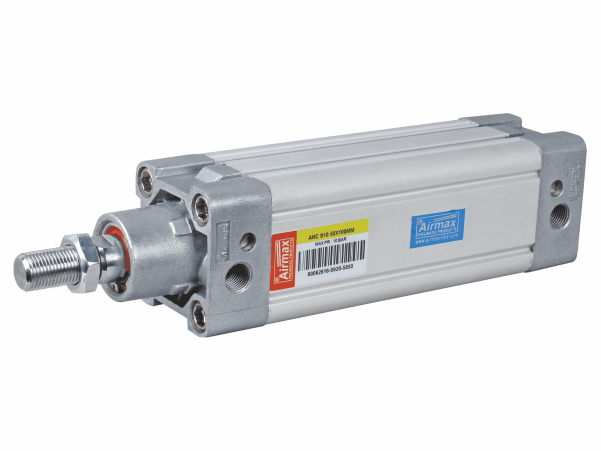
How Pneumatic Cylinders Are Revolutionizing The Manufacturing Industry

Pneumatic cylinders are widely utilized in various industries for their ability to convert compressed air into linear mechanical force. These versatile devices find applications in countless processes, providing several benefits for businesses. Here are some key points about the use of pneumatic cylinders:

  • Versatility: Pneumatic cylinders are employed in diverse industrial sectors, including manufacturing, automation, packaging, and transportation. They can perform various tasks, such as lifting, pushing, pulling, rotating, and clamping, making them invaluable in many applications.


  • Simple and Compact Design: Pneumatic cylinders have a straightforward design, consisting of a cylinder, piston, and compressed air supply. This simplicity allows for easy installation, maintenance, and operation. Moreover, their compact size makes them suitable for space-restricted environments.


  • Fast and Efficient Operation: Pneumatic cylinders offer rapid response times, enabling quick and efficient motion control. They can generate high forces and achieve fast acceleration and deceleration, contributing to enhanced productivity in industrial processes.


  • Safety: Pneumatic cylinders incorporate safety features such as overload protection and emergency stop functionalities. They can be integrated with safety systems, ensuring the well-being of operators and preventing accidents.


  • Durability and Reliability: Pneumatic cylinders are known for their robust construction and ability to withstand demanding conditions. They can operate in extreme temperatures, resist corrosion, and handle high-pressure environments, resulting in long-lasting performance.


Partnering with a reputable manufacturer is essential to harness the benefits of pneumatic cylinders. Choosing a reliable manufacturer ensures the availability of high-quality products, customization options, and excellent customer support.


When searching for a pneumatic cylinder manufacturer, consider factors such as experience, reputation, product range, certifications, and customer reviews. Collaborating with a trusted manufacturer will provide reliable pneumatic cylinders and offer valuable technical expertise and after-sales service.


In conclusion, pneumatic cylinders offer versatility, a simple design, fast operation, safety features, and durability. Businesses can optimize operations, improve efficiency, and achieve reliable performance in various industrial applications by partnering with a reputable pneumatic cylinder manufacturer.

The Different Types of Pneumatic Cylinders


Pneumatic cylinders are widely used in various industries for linear motion applications. They provide efficient and reliable force generation, making them essential components in automation systems. Here are the different types of pneumatic cylinders:


  • Single-Acting Cylinders: These cylinders operate in one direction, usually extending when pressurized and retracted by a spring or external force when the pressure is released. Single-acting cylinders are simple, cost-effective, and commonly used for applications that require force in only one direction.


  • Double-Acting Cylinders: Double-acting cylinders have two ports, allowing for pressurization on both sides. They can extend and retract using compressed air, providing bidirectional force. Double-acting cylinders offer precise control and are suitable for applications that require force in both directions.


  • Rodless Cylinders: The piston is not connected to an external rod in rodless cylinders. Instead, it is contained within a slide or carriage mechanism. This design eliminates the need for external guiding systems, making rodless cylinders ideal for applications with limited space or requiring longer strokes.


  • Compact Cylinders: Compact cylinders are designed for applications with limited space constraints. They have a smaller footprint while delivering the necessary force and stroke length. These cylinders are commonly used in robotics, packaging machinery, and other compact automation systems.


  • Rotary Cylinders: Rotary cylinders convert compressed air into rotary motion. They are used to rotate or index components in machines and equipment. Rotary cylinders are available in various configurations, including vane-type, rack-and-pinion, and helical rotary cylinders, allowing for precise and controlled rotation.


To ensure the quality and reliability of pneumatic cylinders, partnering with a reputable manufacturer is essential. They can provide expert guidance, offer a wide range of cylinder types, and ensure that the products meet industry standards and specific application requirements.

The Advantages of Pneumatic Cylinders 


  • Powerful and Versatile: Pneumatic cylinders can generate significant force, making them suitable for various applications. Whether lifting heavy loads, pushing, pulling, or gripping objects, pneumatic cylinders deliver the power to perform various tasks.


  • Quick and Responsive: Pneumatic cylinders provide rapid response times, allowing fast and precise movement. They can accelerate and decelerate quickly, enabling efficient and agile manufacturing, packaging, and automation operations.


  • Simple and Compact Design: Pneumatic cylinders have a straightforward design, consisting of a piston, cylinder, and compressed air source. This simplicity makes them easy to install, operate, and maintain. Their compact size allows for space-saving installations in tight or limited areas.


  • Cost-Effective Solution: Pneumatic cylinders are generally more affordable than hydraulic or electric alternatives. They have lower initial costs, require minimal maintenance, and consume less energy, resulting in long-term business cost savings.


  • Safety and Reliability: Pneumatic cylinders have built-in safety features like overload protection and fail-safe mechanisms. They are also durable and resistant to harsh conditions, ensuring reliable performance even in demanding environments.


Partnering with a reputable manufacturer is crucial to leverage the advantages of pneumatic cylinders. Choosing a reliable manufacturer will guarantee high-quality products, exceptional customer support, and tailored solutions for your specific needs.


How Pneumatic Cylinders are Being Used in The Manufacturing Industry 


  • Automated Machinery: Pneumatic cylinders are crucial in automated manufacturing processes. They are employed in robotic systems to perform precise and repetitive tasks, such as pick-and-place operations, material handling, and assembly line operations.


  • Actuation of Equipment: Pneumatic cylinders are used to actuate various equipment in the manufacturing industry. They provide linear motion to control valves, gates, clamps, and presses, allowing for precise control over the movement of machinery.


  • Force and Pressure Generation: Pneumatic cylinders generate the force and pressure required for certain manufacturing processes. They can apply consistent and controlled pressure for pressing, stamping, and forming operations.


  • Safety Applications: Pneumatic cylinders are utilized for safety applications in manufacturing plants. They are employed in safety systems, such as emergency stops, safety doors, and safety barriers, ensuring the protection of workers and preventing accidents.


  • Compact and Versatile Design: Pneumatic cylinders are known for their compact and lightweight design, making them suitable for various space-restricted applications. Their versatility allows for easy integration into different manufacturing setups.


To leverage the benefits of pneumatic cylinders in the manufacturing industry, it is essential to collaborate with a reliable pneumatic cylinder manufacturer. A reputable manufacturer will provide high-quality cylinders that meet industry standards, ensuring efficient and reliable performance in manufacturing processes.

The Future of Pneumatic Cylinders


  • Advanced Materials: Pneumatic cylinder manufacturers are exploring innovative materials such as carbon fiber composites and lightweight alloys to improve the performance and efficiency of cylinders. These materials offer enhanced strength-to-weight ratios, reducing overall weight and energy consumption.


  • Smart and Connected Systems: The future of pneumatic cylinders lies in integrating smart technologies and connectivity. Manufacturers are developing intelligent cylinders with embedded sensors and wireless communication capabilities, allowing for real-time monitoring, predictive maintenance, and remote control.


  • Energy Efficiency: With a growing emphasis on sustainability, pneumatic cylinder manufacturers are focused on developing energy-efficient solutions. This includes optimizing cylinder designs, minimizing air leakage, and utilizing regenerative technologies to harness and recycle energy within the system.


  • Miniaturization: As industries demand smaller and more compact equipment, pneumatic cylinder manufacturers work towards miniaturizing cylinders without compromising performance. The need for space-saving solutions in robotics, automation, and other industries drives this trend.


  • Customization and Adaptability: Manufacturers recognize the importance of offering customizable pneumatic cylinders to meet specific application requirements. This includes providing options for stroke length, mounting styles, and additional features to ensure seamless integration and optimal performance.


In the future, pneumatic cylinder manufacturers will continue to innovate and adapt to meet the evolving needs of industries. To stay at the forefront of these advancements, partnering with a reputable pneumatic cylinder manufacturer that invests in research and development is essential.

Friday, 31 March 2023

How to Choose the Right Pneumatic Cylinder Manufacturer

Are you in the market for a pneumatic cylinder manufacturer? If so, you're in the right place. Choosing the right manufacturer for your pneumatic cylinder needs is important; this blog post will discuss how to do just that. We'll provide an overview of what pneumatic cylinders are, explain the various types available, and discuss the criteria you should use when selecting a manufacturer. You'll have the knowledge and confidence to make an informed decision by the end. Let's get started!

Introduction


Choosing the right pneumatic cylinder manufacturer is an important decision for any business, as it can significantly impact performance, profitability, and customer satisfaction. Pneumatic cylinders are vital components of many industrial processes and applications, so selecting a manufacturer that can provide reliable and high-quality products is essential.


When selecting a pneumatic cylinder manufacturer, it is important to consider several factors, such as product quality, delivery speed, and cost. Additionally, it is beneficial to choose a company that offers additional services like design assistance and custom engineering solutions. The right manufacturer should also have an established track record of excellent customer service. It's also important to research the types of materials used in the production process and their environmental standards to ensure safety and environmental compliance.


Furthermore, evaluate the supplier's experience in manufacturing pneumatic cylinders. Look at their years in business and their technical expertise in product design and fabrication capabilities. It is also wise to inquire about their quality control measures throughout production, including testing procedures before shipping products. Finally, consider any warranties or guarantees offered by the manufacturer in case there are any issues with your purchase down the line.


In conclusion, choosing the right pneumatic cylinder manufacturer requires careful consideration on multiple levels, including product quality assurance measures, customer service levels, and price points, among other factors specific to your needs. Researching different manufacturers before selecting will help you make an informed choice that will benefit your business for years.


What are pneumatic cylinders?


Pneumatic cylinders are devices used to apply force in a linear motion. They are commonly used in industrial automation applications and come in many shapes, sizes, and materials. Pneumatic cylinders are powered by pressurized air and feature an internal piston connected to a rod that moves when air is forced into the cylinder. This movement can power various mechanical components such as actuators or pumps. 


The main components of a pneumatic cylinder include the cylinder body, the piston rod, end caps, seals and seal guides, and the pneumatic actuator. The cylinder body houses the compressed air, which pushes on the piston rod to create motion. End caps seal off each end of the cylinder body, while seal guides keep dust and other particles out of the interior working parts of the device. The pneumatic actuator controls how quickly or slowly air is released from within the cylinder body, which affects how quickly or slowly it performs its task. 


When purchasing pneumatic cylinders for industrial applications, it's important to take into account several factors, including size, operating pressure range, material type, operating temperature range compatibility with other components in your system as well as any additional features you may need for your specific application such as stroke length adjustment or speed control. It's also important to consider warranties manufacturers offer for their products since these can be invaluable if something goes wrong. 


Choosing a quality manufacturer for your pneumatic cylinders is essential for ensuring reliable performance over time. So, research before purchasing or committing to long-term contracts with suppliers!

What type of pneumatic cylinder do you need?


When selecting a pneumatic cylinder, it is important to consider the specific application for which it is needed. Different types of cylinders are available for different applications, and choosing the wrong type can lead to problems with performance and reliability. 


The most common type of pneumatic cylinder is a single-acting cylinder. This type uses compressed air to move the piston rod in one direction; when compressed air enters one side of the cylinder, the rod will extend outward from its resting position. Single-acting cylinders are typically used where power must be applied in only one direction, such as clamping or pushing objects together.


Another popular type of pneumatic cylinder is a double-acting cylinder. This type uses compressed air on both sides of the piston rod to move it back and forth between extended and retracted positions. Double-acting cylinders are usually used where power must be applied in both directions, such as lifting or moving heavy loads up and down or operating valves with two positions. 


If an automated system requires high-speed operation, an air-driven rotary actuator should be considered instead of a linear actuator (pneumatic cylinder). These actuators use pressurized air to rotate a shaft. They can be used for applications such as opening/closing doors or controlling flow rates by regulating valve position at high speeds. 


Finally, if your application requires precise control over position or speed, you may consider servo-controlled cylinders instead of traditional pneumatic cylinders. Servo-controlled cylinders use advanced control systems that allow them to precisely control their angular positions to accurately move objects at specific speeds over short distances. They are often used for precision machining operations such as drilling or milling small parts with tight tolerances. 


When selecting your pneumatic cylinder, consider these various types to select the right one for your application.

Choose a manufacturer with experience. 


When selecting a manufacturer for your pneumatic cylinder, it is important to consider their experience level. Look for a supplier that has been in the industry for many years and is familiar with the latest technologies. A reliable manufacturer will have the expertise to provide high-quality products that meet your needs and specifications. Additionally, look for one that offers comprehensive warranties on their cylinders and stands behind their work.


It is also important to research the company and ensure they are reputable. Check online reviews from previous customers, as these can provide valuable insight into customer experiences with the company's products and services. Ask questions about how long they have been in business, what type of service they offer, and what certifications they hold. Finally, inquire about their pricing structure, delivery times, and any other relevant information you may need to decide when selecting a pneumatic cylinder manufacturer.


In addition to researching the company itself, learning more about its product offerings is important. Ask questions about the materials used in construction and any additional features or options available with each model. This will help you determine which cylinder best meets your requirements while staying within budget constraints. It is also helpful to request samples or view photos of actual products before purchasing to know exactly what you are purchasing from the supplier.


Due to today's options, choosing a dependable pneumatic cylinder manufacturer can be overwhelming. However, carefully researching potential suppliers can prevent costly mistakes and ensure that you receive top-notch products backed by reliable customer service at competitive prices. With just a bit of effort up-front, you can be satisfied with long-lasting performance and reliability from your new pneumatic cylinders over time!

Consider a custom pneumatic cylinder manufacturer. 


When selecting a pneumatic cylinder manufacturer, it is also important to consider the advantage of custom-made products. Custom-designed cylinders offer a range of benefits that may not be available in off-the-shelf models. A custom manufacturer can design cylinders with specific features and performance characteristics tailored to your application needs. They can also replicate and modify existing designs to improve performance or meet new requirements. 


Custom manufacturers can create unique components and accessories like pressure switches, sensors, or other control options. Furthermore, they often offer shorter lead times than off-the-shelf models, allowing for faster installation and fewer production delays. Finally, custom manufacturers often include warranties on their products and may even provide after sales service for repairs or maintenance needs. 


When selecting a custom pneumatic cylinder manufacturer, research their capabilities and experience in the field. Look for suppliers with extensive experience designing and manufacturing custom cylinders for various applications. Consider their pricing structure and delivery times to ensure you receive the best product at an affordable cost while meeting your timeline requirements. Additionally, please inquire about additional services they provide, such as prototyping or engineering support, to help fine-tune your design before production begins. Evaluating potential suppliers thoroughly ensures satisfaction with quality components that meet your exact specifications.

Consider the quality of the products.


When selecting a pneumatic cylinder manufacturer, it is essential to consider the quality of their products. Quality should be considered in terms of both material and craftsmanship. Materials used should offer strength and durability, while craftsmanship should ensure precise dimensions and tolerances that meet the desired specifications.


It is also important to consider whether or not the manufacturer offers testing services for its products. Manufacturers strongly committed to quality assurance may offer testing services such as dimensional verification, air leakage tests, noise emission tests, and performance tests. This can ensure that your pneumatic cylinders will perform as expected over time.


Additionally, look for a supplier that stands behind their product with warranties or guarantees. Warranties provide peace of mind by covering unforeseen issues that could arise during operation due to defects in materials or artistry; they also incentivize manufacturers to produce quality components built to last. Guarantees can also provide additional confidence in a product's reliability by offering refunds or replacements if certain criteria are unmet. 


Finally, take note of any certifications the manufacturer has received from reputable organizations such as ISO (International Organization for Standardization) or CE (European Conformity). These certifications signify that the manufacturer has adhered to strict standards when producing their pneumatic cylinders and can help guarantee the quality of their products. 


In summary, when looking for a pneumatic cylinder manufacturer, it is important to consider factors such as experience, price structure, and delivery times; however, evaluating the quality of materials used and craftsmanship provided by potential suppliers is equally important before making a purchase decision. Factors such as testing services, warranties, guarantees, and relevant certifications can help ensure satisfaction with reliable components backed by reputable manufacturers.

Saturday, 25 February 2023

Why Pneumatic Cylinders Are The Best Manufacturing Choice

If you're in the manufacturing business, then you know that choosing the right equipment is crucial to your success. There are many different options out there, but pneumatic cylinders are often the best choice. In this blog post, we'll explore some of the reasons why pneumatic cylinders are the best option for manufacturing, as well as some of the benefits they offer.

An overview of pneumatic cylinders 


Pneumatic cylinders are a type of mechanical device that uses compressed gas to generate linear force and motion. The name ‘pneumatic’ comes from the Greek word for ‘wind’, and these devices have been used since ancient times in a variety of applications. In the modern world, pneumatic cylinders are commonly used in manufacturing and construction, as well as in a wide range of other industries.


Pneumatic cylinders work by converting the energy of compressed gas into kinetic energy, which is then used to create linear motion. This process is known as ‘piston-cylinder actuation’. A key advantage of pneumatic cylinders over other types of actuators is that they can generate very high forces, making them ideal for use in industrial applications.


There are two main types of pneumatic cylinder: single-acting and double-acting. Single-acting cylinders have a piston that is moved by compressed gas on one side only, while double-acting cylinders have a piston that is moved by compressed gas on both sides. Double-acting cylinders are more common than single-acting cylinders, as they offer a number of advantages over their counterparts.


One advantage of pneumatic cylinders is that they can be used in a wide range of environments, including hazardous or explosive atmospheres. This is because there are no electrical components in pneumatic cylinders, which eliminates the risk of sparks or explosions. Pneumatic cylinders are also resistant to shock and vibration, making them ideal for use in industrial applications.


Another advantage of pneumatic cylinders is that they require very little maintenance and are relatively easy to repair if they do break down. This is due to the simple design of pneumatic cylinders, which consists of just a few moving parts.

Why pneumatic cylinders are the best option for manufacturing 


Pneumatic cylinders are a type of mechanical actuator that use compressed gas to produce linear motion. They are often used in manufacturing and industrial applications because they offer a number of advantages over other types of actuators.


One reason why pneumatic cylinders are the best option for manufacturing is that they can be configured to suit a wide range of applications. For example, they can be designed for use in high-temperature or explosive environments, or for applications where space is limited.


Another advantage of pneumatic cylinders is that they are relatively easy to maintain and repair. This is important in manufacturing applications, where downtime needs to be kept to a minimum.


Finally, pneumatic cylinders offer a high degree of precision and repeatability. This is essential in many manufacturing processes, where products need to meet tight tolerances.

The benefits of pneumatic cylinders 


Pneumatic cylinders offer a wide range of benefits that make them the best choice for many manufacturing applications. 


One of the most important benefits of pneumatic cylinders is that they can be configured for a wide range of applications. Pneumatic cylinders come in a variety of sizes and shapes, and can be custom-designed to meet the specific needs of any application. 


Another major benefit of pneumatic cylinders is that they are easy to maintain and repair. Unlike other types of actuators, pneumatic cylinders do not require regular lubrication or maintenance. In addition, if a pneumatic cylinder does need to be repaired, it can be done quickly and easily, without the need for specialized tools or training. 


Pneumatic cylinders also offer high precision and repeatability, which is critical for many manufacturing applications. Pneumatic cylinders use compressed air to generate force, which means that they can produce very precise and repeatable motion. This makes pneumatic cylinders ideal for use in automation systems and other applications where accuracy is essential. 


In summary, pneumatic cylinders offer a wide range of benefits that make them the best choice for many manufacturing applications. They can be configured for a wide range of applications, are easy to maintain and repair, and offer high precision and repeatability.

Pneumatic cylinders vs. other manufacturing options 


Pneumatic cylinders offer many advantages over other types of actuators, including the ability to be configured for a wide range of applications, easy maintenance and repair, and high precision and repeatability.


When choosing an actuator for a manufacturing application, it is important to consider all of the available options in order to select the best option for the specific application. Other types of actuators include hydraulic cylinders, electric motors, and linear actuators. Each type of actuator has its own advantages and disadvantages that should be considered when making a decision.


Hydraulic cylinders are often used in applications where high force is required. However, they are less precise than pneumatic cylinders and can be more difficult to maintain. Electric motors are more precise than hydraulic cylinders but can require more maintenance. Linear actuators are simple and rugged but have limited force output.


Pneumatic cylinders offer the best combination of features for most manufacturing applications. They can be configured for a wide range of forces and strokes, are easy to maintain, and offer high precision and repeatability.

How to Select the Right Pneumatic Cylinder


When selecting a pneumatic cylinder manufacturer, there are several important factors to consider, including the intended force and stroke, the operating environment, and the required precision and repeatability.


The first step is to determine the intended force and stroke. Pneumatic cylinders are available in a wide range of sizes and capacities, so it is important to select a cylinder that is capable of generating the required force. The stroke is the distance that the piston will travel within the cylinder and should be chosen based on the desired movement of the load.


The operating environment is another important consideration. Pneumatic cylinders are designed for use in both indoor and outdoor applications. If the application will be exposed to harsh conditions, such as extreme temperatures or high humidity, it is important to select a cylinder that is designed for use in those conditions.


Finally, the required precision and repeatability should be considered. Pneumatic cylinders offer high precision and repeatability, making them ideal for applications where those qualities are important.

Thursday, 23 February 2023

Picking The Right Pneumatic Cylinder: A Comprehensive Guide

When it comes to selecting the right pneumatic cylinder for a particular application, a few factors need to be taken into account. In this comprehensive guide, we will cover everything you need to know about pneumatic cylinders, from the different types available to their advantages and disadvantages. We will also provide some tips on installing and maintaining your pneumatic cylinder to ensure optimal performance.

What is a pneumatic cylinder?


A pneumatic cylinder types is a mechanical device that uses compressed air to generate linear force and motion. The air pressure on the piston inside the cylinder causes the point.


Pneumatic cylinders are used in various applications, from simple household tasks like opening and closing doors to more complex industrial applications like moving heavy machinery or control valves.


There are two main types of pneumatic cylinders: single-acting and double-acting. Single-acting cylinders have a piston moved by the air pressure on one side. Double-acting cylinders have a piston driven by the air's force on both sides.


Pneumatic cylinders are available in various sizes and capacities, from small cylinders that generate only a few pounds of force to large cylinders that create tens of thousands of pounds of force.


The types of pneumatic cylinders 


Three main types of pneumatic cylinders are single-acting, double-acting, and diaphragm. 


Single-acting cylinders have a piston pushed in one direction by atmospheric pressure and pulled back by a spring. This type of cylinder is typically used for applications requiring low force, such as door closers. 


Double-acting cylinders have a piston that is pushed and pulled by atmospheric pressure. This type of cylinder is more versatile than a single-acting cylinder and can be used for applications that require either high or low force. 


Diaphragm cylinders have a flexible diaphragm that expands and contracts to move the piston. This type of cylinder is typically used for applications requiring precise control, such as robotics.

What factors to consider when selecting a pneumatic cylinder 


When selecting a pneumatic cylinder, there are a few key factors to consider to ensure you choose the best one for your specific application. 


The first factor to consider is what type of force is required. Single-acting cylinders are typically used for lower force applications, while double-acting cylinders can be used for high or low force applications. Diaphragm cylinders are typically used for applications requiring precise control. 


The second factor to consider is the size of the bore. The bore is the diameter of the piston and determines how much air is displaced with each stroke. A larger bore will replace more air, which can be helpful for high-force applications. 


The third factor to consider is the material the cylinder is made from. Common materials include aluminum, stainless steel, and brass. Each material has its benefits and drawbacks, so it's essential to choose one that will be compatible with the rest of your system and hold up under the conditions it will be subjected to. 


Finally, you'll need to decide on a mounting style. The three most common styles are flange, trunnion, and clevis. The specific requirements of your application will determine the mounting style you choose. 


By taking all of these factors into consideration, you can be sure to select the best pneumatic cylinder for your needs.

Advantages and disadvantages of pneumatic cylinders


Pneumatic cylinders have several advantages over other types of cylinders. They are typically more compact, lighter in weight, and less expensive. Pneumatic cylinders also have a higher power-to-weight ratio than hydraulic cylinders.


Pneumatic cylinders do have some disadvantages, however. They are not as durable as hydraulic cylinders and can be damaged by moisture and corrosion. They also require a constant supply of compressed air, which can be expensive.

How to install a pneumatic cylinder 


Installing a pneumatic cylinder is a relatively simple process, but there are a few things to remember to ensure it is installed correctly:


  • Ensure that the mounting holes on the cylinder are aligned with the mounting holes on the application.

  • Insert the piston rod into the application and secure it with the retaining ring.

  • Tighten all of the mounting bolts to secure the cylinder in place.


If you follow these simple steps, you can be sure your pneumatic cylinder will be installed correctly and provide years of reliable service.

How to maintain a pneumatic cylinder


Pneumatic cylinders are mechanical devices that use compressed air to generate linear force and motion. They are often used in industrial and manufacturing applications where their compact size, lightweight, and relatively low cost make them an attractive option. However, hydraulic cylinders are less durable than pneumatic cylinders and require more frequent maintenance.


To keep your pneumatic cylinder in good working condition, it is essential to perform regular maintenance. This includes inspecting the cylinder for leaks, damage, or wear; lubricating the moving parts; and keeping the air filter clean. In addition, it is essential to check the pressure regularly to ensure it is within the specified range for your particular application.


If you notice any problems with your pneumatic cylinder, it must be repaired or replaced as soon as possible. Failure to do so could damage other equipment parts or even cause personal injury.

Tuesday, 24 January 2023

Finding the Best Pneumatic Cylinder Manufacturer for Your Business

 What are Pneumatic Cylinders and their Applications

Air and pneumatic cylinders are mechanical devices that use compressed air to produce force in a linear motion. These tools are frequently employed in industrial and manufacturing environments for clamping, pushing, and lifting. Manufacturers frequently use pneumatic cylinders because of their long lifespan, high dependability, and simplicity of usage.

Top Pneumatic Cylinder Manufacturers in the Industry

A few firms stand out in the market when it comes to choosing the finest pneumatic cylinder manufacturer for your company. Leading producers include Bosch Rexroth, Festo, Airmax, and Parker Hannifin. These businesses have a solid reputation for creating pneumatic cylinders of the highest caliber for various uses. It is crucial to remember that the finest manufacturer for your company will rely on your unique needs and demands.

Criteria for Choosing the Right Pneumatic Cylinder Manufacturer

There are many factors to consider when choosing a manufacturer of pneumatic cylinders. The calibre of the manufacturer's cylinders is a significant influence. Choosing a manufacturer that creates cylinders that adhere to industry requirements and are constructed from robust materials is crucial. The accessibility of customer care and technical assistance is a further consideration. Any problems that could arise when using the cylinders can be resolved by a manufacturer providing a high degree of technical support and customer care.


Another critical consideration when selecting a pneumatic cylinder manufacturer is the cost of their products. It is critical to select a manufacturer who offers affordable pricing without sacrificing cylinder quality. The duration of the cylinders' delivery should also be taken into account. Select a manufacturer capable of delivering the goods on schedule and under budget.

Future of Pneumatic Cylinder Technology and Its Impact on Manufacturing

The future of pneumatic cylinder technology is promising, with materials, design, and automation advancements. The industry is expected to grow and evolve as more manufacturers enter the market and new technologies are developed. With the increasing demand for automation, the demand for pneumatic cylinders will also increase. It means that manufacturers must keep up with the changing technology and develop more efficient and cost-effective products.

Conclusion

Pneumatic cylinders are an essential part of the manufacturing and industrial process. Choosing the proper pneumatic cylinder manufacturer for your business will ensure that you have the right tools for your specific application and that you can be competitive in the market. When choosing a manufacturer, it is essential to consider factors such as quality, technical support, customer service, price, and delivery time. With the ever-evolving technology, the future of pneumatic cylinder manufacturers is promising, and the industry will continue to grow in the coming years.


Saturday, 25 June 2022

What Is a Pneumatic Cylinder Actuator?

 Pneumatic cylinder actuators don't weigh a lot. They don't need a lot of support. They produce less power and have a somewhat slow speed when contrasted with pressure-driven frameworks or electric frameworks. All things considered, they are a savvy elective.


How does the pneumatic cylinder actuator function?


Inside the pneumatic cylinder actuator, there are parts, for example, the end cap, the cylinder, the cylinder pole, the cylinder barrel, the wiper seal, the pad sleeve, and the seal. Some pneumatic cylinder actuators are single-acting and can be worked with a button. The air will then, at that point, move the cylinder pole outward when the button is pushed. The pneumatic frameworks used the air which has been packed to make the rotating or the straight movement and ability to accomplish the work. The pneumatic cylinder actuator is the sort of gadget which resembles the pneumatic framework, using compacted air to drive the cylinder inside the cylinder to make the power or the movement that is required.


Sorts of Pneumatic Cylinder Actuator


● A single-acting pneumatic cylinder actuator :


A single-acting pneumatic cylinder actuator is furnished with one port, where the air will enter and push the cylinder is only one heading. After the cycle, the cylinder will get back to the unique situation by a spring prepared in the framework. A single-acting pneumatic cylinder has a stroke length that is restricted. Involving the single-acting pneumatic cylinder actuator for more slow operations is better. The pneumatic cylinder actuator likewise doesn't utilize a ton of air which will, thusly, accomplish more noteworthy productivity and have lower working expenses.


● A twofold acting pneumatic cylinder actuator:


A twofold acting pneumatic cylinder actuator then again has two ports. These two ports work the other way. The ports will permit the strain to be applied, so the cylinder can be pulled the other way from the one made by the primary port. These activities are at times alluded to as the in-stroke and the outstroke. As a rule, on the off chance that the pneumatic cylinder actuator is bigger, the more prominent the power can be yielded.


Utilizations of Pneumatic Cylinder Actuator


The pneumatic cylinder actuator can be applied to many businesses. For instance, they can be used in the computerization frameworks of the manufacturing plants. The pneumatic cylinder actuator can likewise be utilized in tasks, for example, bracing. During the time spent bracing, the workpiece will be stood firm on the right footing by the jaws which are worked by the cylinder. There is likewise punching, it is where the push from the single-acting pneumatic cylinder actuator can be utilized to mark an article.


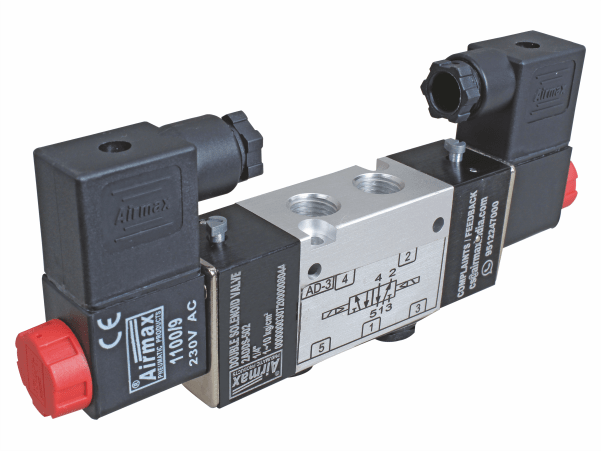
Understanding the Basics of Pneumatic Valves: A Comprehensive Guide

Embark on a journey into the fascinating realm of pneumatic systems, where the power of compressed air drives a myriad of industrial applica...