Showing posts with label Pneumatic Fittings Supplier. Show all posts

Saturday, 24 June 2023

Factors to Consider When Selecting Pneumatic Fittings for Your System


Introduction:

Pneumatic fittings play a crucial role in connecting and controlling various components in pneumatic systems. 

Compatibility:

One of the primary considerations when choosing pneumatic fittings is compatibility with the existing system components. Compatibility issues can lead to leaks, pressure drops, and decreased overall system efficiency.

Application Requirements: 

Different applications require different types of pneumatic fittings. Consider factors such as the operating pressure range, temperature range, and media compatibility. Understanding your application requirements will help you select the most appropriate fittings.

Each type has its advantages and limitations. Assess the specific demands of your system to determine the most suitable fitting type.

Size and Configuration: 

The size and configuration of pneumatic fittings are critical for ensuring proper airflow and system performance. Consider the inner and outer diameter of the tubing, thread size, and overall dimensions of the fittings. Incorrect sizing can result in restricted airflow, pressure drops, and inefficiencies. Carefully match the fitting sizes with your tubing and system requirements.

Material Selection: 

Choosing the right material for pneumatic fittings is crucial to ensure compatibility and durability. Evaluate the chemical resistance, pressure ratings, and temperature limitations of different materials. Consider factors such as the presence of corrosive substances or exposure to harsh environments. Select materials that will withstand the operating conditions of your system.

Safety and Reliability: 

Consider the quality and reputation of the fittings manufacturer. Look for certifications and standards compliance, such as ISO, DIN, or NSF. Ensure the fittings have proper seals and locking mechanisms to prevent leakage and accidental disconnection.

Compare prices from different suppliers, but also assess the overall value, quality, and long-term reliability of the fittings. Opting for cheaper, low-quality fittings may lead to frequent replacements, system downtime, and increased costs in the long run.

Conclusion:

Consider factors such as compatibility, application requirements, fitting type, size and configuration, material selection, safety, reliability, and cost. Airmax Pneumatic is a leading provider of high-quality pneumatic fittings, renowned for our commitment to excellence and customer satisfaction.


Friday, 17 March 2023

How Pneumatic Fittings Improve Air Quality In The Workplace

If you're looking for a way to improve the air quality in your workplace, pneumatic fittings may be the answer. Pneumatic fittings are specially designed to improve airflow and reduce contaminants in the air. In this blog post, we'll look closer at how pneumatic fittings enhance the air quality in the workplace and how your business can benefit from making the switch.

Introduction


An effective pneumatic system is critical to many industries as it provides the means to power equipment using compressed air. Pneumatic fittings are essential in ensuring compressed air quality by providing a secure connection between different system parts.


Many different types of pneumatic fittings are available on the market, each designed for a specific application. The correct fitting for the job is essential to ensure optimal performance and avoid costly repairs.


Pneumatic fittings are available in various materials, including brass, stainless steel, and plastic. Each material has its own advantages and disadvantages that should be considered when making a selection.


Brass pneumatic fittings are popular due to their durability and resistance to corrosion. They are, however, susceptible to damage from chemicals and should not be used in applications where there is potential for exposure to these substances.


Stainless steel pneumatic fittings offer superior corrosion resistance and are ideal for harsh environments. They are, however, more expensive than brass fittings and can be challenging to work with due to their hardness.


Plastic pneumatic fittings are the most economical option and are suitable for most general-purpose applications. They are, however, less durable than metal fittings and can be damaged by heat or chemicals.


What are pneumatic fittings?


Pneumatic fittings are devices used to connect pipe or tubing sections in pneumatic (air) systems. They are typically made of brass, stainless steel, or plastic. Pneumatic fittings come in various shapes and sizes and are used in multiple applications. Some common types of pneumatic fittings include: 


-Barbed fittings: These have a series of raised ridges (barbs) on the inner surface that grip the tubing when the fitting is pushed into it. Barbed fittings are available in various materials, including brass, plastic, and stainless steel. 


-Compression fittings: These have a cylindrical sleeve that fits over the outside of the tubing. The fitting is then tightened with a nut to create a seal. Compression fittings are available in various materials, including brass, copper, and plastic. 


-Push-fit fittings: These have a sealing ring pushed onto the end of the tubing. The fitting is then inserted into the fitting body and locked in place with a tab or clip. Push-fit fittings are available in various materials, including brass, copper, and plastic.

How do pneumatic fittings improve air quality in the workplace?


Pneumatic fittings, such as in hospitals and food processing plants, are often used in applications where air quality is a concern. By their very nature, pneumatic fittings help to improve air quality in the workplace by reducing the amount of dust and other contaminants that can enter the air system. In addition, pneumatic fittings can be used to connect sections of pipe or tubing that are not perfectly straight, which helps to reduce the amount of turbulence and, thus, the amount of dust and other contaminants that can be stirred up into the air.

Pneumatic fittings and your business


Pneumatic fittings can be a great way to improve air quality in your business. By their very nature, they help reduce the dust and other contaminants that can enter the air system. In addition, pneumatic fittings can be used to connect sections of pipe or tubing that are not perfectly straight, which helps to reduce the amount of turbulence and, thus, the amount of dust and other contaminants that can be stirred up into the air.


There are a few things to remember when choosing pneumatic fittings for your business. First, you'll want to consider the specific needs of your business. What types of contaminants are you trying to remove from the air? What is the size and scope of your air system? Once you understand your needs well, you can look at different types of pneumatic fittings and find the ones that will work best for your business.


Another important consideration is the cost of pneumatic fittings. While they can be a significant investment in improving air quality, they also come with a price tag. Be sure to compare prices from different suppliers before making a decision.


Finally, install and maintain your pneumatic fittings according to the manufacturer's instructions. This will help ensure they continue to work correctly and do not introduce any new contaminants into your air system.

Making the switch to pneumatic fittings


Switching to pneumatic fittings may be a good option if your business wants to improve air quality. Pneumatic fittings are devices used to connect pipe or tubing sections in pneumatic (air) systems, and they can be made of brass, stainless steel, or plastic. They come in various shapes and sizes and can be used in multiple applications. Pneumatic fittings help to improve air quality by reducing the amount of dust and other contaminants that can enter the air system. In addition, pneumatic fittings can be used to connect sections of pipe or tubing that are not perfectly straight, which helps to reduce turbulence and the amount of dust and other contaminants that can be stirred up into the air. When choosing pneumatic fittings, you'll want to consider your business's specific needs, the fittings' cost, and the manufacturer's instructions for installation and maintenance. Switching to pneumatic fittings can be a great way to improve air quality in your workplace.

Conclusion


Pneumatic fittings are a great way to improve air quality in the workplace by reducing the amount of dust and other contaminants that can enter the air system. They can be used to connect sections of pipe or tubing that are not perfectly straight, which helps to reduce turbulence and the amount of dust and other contaminants that can be stirred up into the air. When choosing pneumatic fittings, businesses should consider their business's specific needs, the fittings' cost, and the manufacturer's instructions for installation and maintenance. Switching to pneumatic fittings can be a great way to improve air quality in your workplace.

Saturday, 4 March 2023

How To Choose The Right Pneumatic Fittings For Your Application

If you're working with pneumatic equipment, then you know that choosing the right fittings is crucial to the success of your application. But with so many different types of pneumatic fittings on the market, knowing which ones are right for your needs can be challenging.

In this blog post, we'll look at what pneumatic fittings are, why they're essential, and how to choose the right ones for your application. By the end, you'll be an expert on pneumatic fittings!

Introduction


If you're looking for pneumatic fittings, you must know what application you will use them for. There are many different types of pneumatic fittings, each designed for a specific purpose. This article will help you choose the right pneumatic fittings for your application.


Pneumatic fittings are used in various applications, from automotive to aerospace. They're also used in many industrial and commercial applications. Pneumatic fittings come in different shapes and sizes, and they're made from various materials. The most common material used for pneumatic fittings is brass.


There are two types of pneumatic fittings: push-to-connect (PTC) and quick-connect (QC). PTC fittings are the most common type of fitting used in automotive applications. QC fittings are commonly used in aerospace applications.


When choosing pneumatic fittings, you need to consider the following factors:


- The type of application you're using them for

- The type of material you need them to be made from

- The size and shape of the fitting

- The pressure rating of the fitting

What are pneumatic fittings? 


Pneumatic fittings are components used to connect sections of pipe, tube, and hose in pneumatic (pressurized gas) systems. Depending on the application, pneumatic fittings can be made from various materials, including metals (brass, stainless steel, and aluminum), plastics (polyurethane and nylon), or rubber. The most common type of pneumatic fitting is the quick-connect or push-to-connect fitting, which utilizes a release valve that allows for quick and easy connection and disconnection of pipe, tube, or hose sections.

Why are pneumatic fittings important in applications? 


Pneumatic fittings are essential in applications because they provide a way to connect sections of pipe, tube, and hose in a pneumatic system. Pneumatic fittings can be made from various materials, including metals, plastics, or rubber. The most common type of pneumatic fitting is the quick-connect or push-to-connect fitting.


Pneumatic fittings are used in various applications, such as automotive, aerospace, and construction. They are also used in pneumatic tools, such as air compressors and guns. Pneumatic fittings are essential because they provide a way to connect sections of pipe, tube, and hose in a pneumatic system.

What are the different types of pneumatic fittings? 


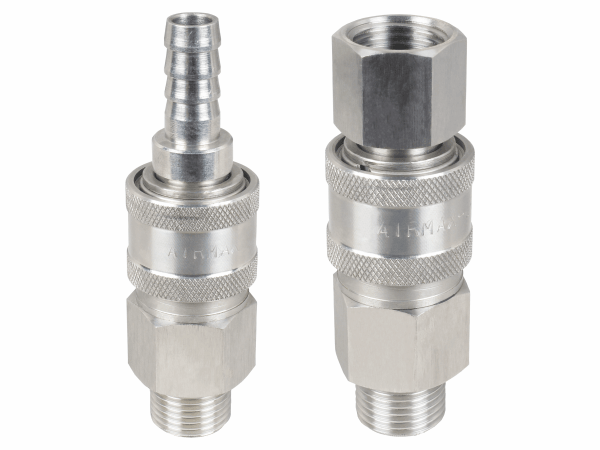
There are a few different types of pneumatic fittings, the most common being quick-connect or push-to-connect fittings. These fittings are easy to use and provide a secure connection for your pneumatic system. Other types of pneumatic fittings include barbed fittings, compression fittings, and threaded fittings.


Barbed fittings connect flexible hoses or tubing to rigid lines, such as pipe sections. The barb on the fitting grips the hose or tubing and creates a seal. Compression fittings are similar to barbed fittings but have a tightened nut to create the seal. Threaded fittings screw into place and are often used in applications requiring a leak-proof seal.


Pneumatic fittings are available in various materials, including metals, plastics, and rubbers. The material you choose should be compatible with the fluid or gas you are using in your system, as well as the temperatures and pressures that will be present. Consult an expert if you need help determining which material suits your application.

How do you choose the right pneumatic fittings for your application? 


When choosing pneumatic fittings for your application, it is essential to consider the type of fitting, the material, the size, and the compatibility with your system. 


The type of fitting you choose will depend on the application. Quick-connect or push-to-connect fittings are standard in applications where ease of use is essential, such as automotive applications. Barbed fittings are often used in applications where a secure connection is needed, such as in construction. Compression fittings, such as aerospace applications, are used when a leak-free connection is required. Threaded fittings are commonly used in high-pressure applications. 


The material you choose should be compatible with the fluid or gas you are using in your system, as well as the temperatures and pressures that will be present. Metals, plastics, and rubbers are commonly used for pneumatic fittings. 


The size of the fitting is also important to consider. The size should be compatible with the tubing or hose you are using in your system. 


Finally, ensuring that the pneumatic fitting you choose is compatible with your system is essential. You must know your system's operating pressure and temperature to ensure the fitting can handle it.

Conclusion


Pneumatic fittings are an essential part of any pneumatic system, and there are a few things to consider when choosing the correct fitting for your application. The type of fitting, the material, the size, and the compatibility with your system are all critical factors to consider. Pneumatic fittings are available in various materials, including metals, plastics, and rubbers. The material you choose should be compatible with the fluid or gas you are using in your system, as well as the temperatures and pressures that will be present.


When choosing pneumatic fittings for your application, carefully considering all the factors affecting performance is essential. By selecting the correct fitting for your needs, you can ensure that your pneumatic system will operate at peak efficiency.

Understanding the Basics of Pneumatic Valves: A Comprehensive Guide

Embark on a journey into the fascinating realm of pneumatic systems, where the power of compressed air drives a myriad of industrial applica...