Tuesday, 6 December 2022

The Ultimate List of Quick Exhaust Valve Manufacturers

If you're looking for quick exhaust valve manufacturers, you've come to the right place. In this blog post, we'll give you an overview of what quick exhaust valves are, how they work, and what the benefits of using them are. We'll also provide a list of the best quick exhaust valve manufacturers so you can choose the right one for your needs.


What is a quick exhaust valve?

A quick exhaust valve (QEV) is a type of valve that is used to release air or other gases from a system. The quick exhaust valve is designed to open and close quickly, which allows it to release the gas before it builds up to a dangerous level. Quick exhaust valves are used in a variety of applications, including pneumatics, compressed air systems, and vacuum systems.

How does a quick exhaust valve work?

A quick exhaust valve (QEV) is a type of valve that is used to release air or other gases from a system. The quick exhaust valve is designed to open and close quickly, which allows it to release the pressure in a system very rapidly.

How does a quick exhaust valve work?

The quick exhaust valve consists of a housing, a diaphragm, and a spring. The housing is typically made of metal or plastic, and it contains the diaphragm and the spring. The diaphragm is a flexible membrane that separates the interior of the housing from the exterior. The spring is located inside the housing and it helps to keep the diaphragm in place.

When the system pressure increases, the diaphragm is pushed outward by the increased pressure. This causes the quick exhaust valve to open and release the pressure in the system. When the system pressure decreases, the spring pushes the diaphragm back into place and closes the quick exhaust valve.

What are the benefits of using a quick exhaust valve?

There are many benefits of using a quick exhaust valve. Perhaps the most obvious benefit is that it can help to release pressure very rapidly. This can be extremely important in systems where the pressure needs to be released quickly, such as in emergency situations. Quick exhaust valves can also help to improve the efficiency of a system by preventing back flow. Back flow can occur when the pressure in a system is released too slowly. This can cause the system to work less efficiently and can even damage some of the parts. Quick exhaust valves can also be used to control the flow of air or other gases in a system. By controlling the flow, quick exhaust valves can help to improve the performance of a system and make it more efficient.

Which quick exhaust valve manufacturer is the best?

There are many factors to consider when determining which quick exhaust valve manufacturer is the best. Some of the factors include quality, price, delivery time, and customer service.

Quick exhaust valves are used in a variety of applications, including automotive, aerospace, and industrial. They are available in a variety of materials, including brass, stainless steel, and plastic. Quick exhaust valves can be manual or automatic. Manual quick exhaust valves are operated by a lever or knob. Automatic quick exhaust valves are operated by a solenoid or pneumatic actuator.

The quality of the quick exhaust valve is important to consider. Quick exhaust valves are designed to release pressure quickly and efficiently. If the quality of the quick exhaust valve is poor, it may not function properly and could cause damage to the system.

Price is another important factor to consider when choosing a quick exhaust valve manufacturer. Quick exhaust valves are available from a variety of manufacturers at different price points. It is important to compare prices from different manufacturers before making a decision.

Delivery time is another consideration when choosing a quick exhaust valve manufacturer. Some manufacturers offer faster delivery than others. If you need your quick exhaust valve urgently, it is important to choose a manufacturer that can deliver the product in a timely manner.

Customer service is another factor to consider when choosing a quick exhaust valve manufacturer. It is important to choose a manufacturer that offers good customer service in case you have any questions or problems with your purchase.

When considering all of these factors, Airmax Pneumatic Company is the best choice for quick exhaust valves. Airmax Pneumatic Company offers high-quality products at competitive prices with fast delivery times and excellent customer service.


Wednesday, 2 November 2022

What You Need to Know About Moisture Separators


WHAT IS A MOISTURE SEPARATOR?


Using a moisture separator, you can remove moisture from gases. Generally, it is used for removing moisture from industrial exhausts. Another use for Moisture Separators is to remove moisture from water pipes. The gas/oil/power industry and domestic industries manufacture these machines in India.


Gravity-based and centrifugal-based industrial moisture separators are the two main types. The force of gravity is used in gravity-based systems to separate liquids. Typically, these systems are found in large manufacturing facilities with a lot of water to remove. In centrifugal systems, liquids are separated using spinning buckets. Because they require less space than gravity-based systems, they are more common in smaller operations.


As a result of their ability to reduce moisture content in air, steam, or gas, moisture separators are one of the most important industrial components. Water and unwanted elements are separated by this machine, as its name suggests. A demister, condensate polisher, or water separator is a type of separator of this type.


BENEFITS OF MOISTURE SEPARATOR


Air, steam, and gas moisture separators are essential industrial components because they reduce moisture content. In addition to separating water from other unwanted elements, this machine also cleans.


Separators of this type are also known as demisters, condensate polishers, and water separators. Gas/oil/power industries and domestic industries manufacture these machines in India.


Afterward, compressed air is passed through a series of horizontal sieves. The size difference between the material and the sieve holes will cause some material to pass through each sieve.


Moisture separators are special centrifuges that separate liquid and solid phases from mixtures.  Machines are able to pour down through mixtures that are split into two phases - solids on top and liquids below.


Moisture removal helps prevent corrosion and other water-related problems in addition to removing water from wastewater. Oxygen and water react with metals to cause corrosion. During this reaction, hydrogen gas is produced, which can cause explosions and fires. Acidic solutions are also created, which eat away at metal surfaces. The failure of structures due to corrosion can even result in death if left untreated.


Airmax Pneumatic is the leading Moisture Separator manufacturer in India. We offer various types of industrial valves and cylinders.

Friday, 7 October 2022

Achieving Optimal Air Prep Performance

You figure out that your pneumatic gear guarantee expresses that the guarantee applies while utilizing perfect, dry air. What's the significance here? It implies that you want the right air prep hardware in light of your application.

Utilize shut-off valves to give well-being during support and repair activities

One of the most underutilized items in the business is the stopped valve that can likewise be locked out while the staff is performing support and repair on your packed air framework. It is a best practice to utilize numerous locks to require both the manager of the area, as well as the support individual, to open the shut-off valve once they concur when the framework is protected to be walked out on.

Keep up with channels routinely

Cleaning channels as a standard upkeep activity assists with decreasing strain drop and saving blower costs for a long time. Obstructed channels bring down the proficiency of your blower, limit the flow of air through lines, and by and large increment energy costs. Having channel components cleaned or potentially supplanted routinely is a first-line capability of keeping up with your air pressure framework.

Utilize the right channel

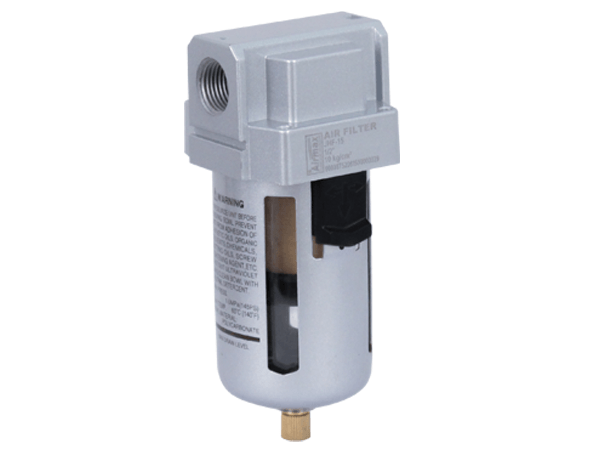
There are a few sorts of impurities in a packed airline. The most well-known are particulate, water, and oil. Which filter(s) you select relies upon your cycle's necessities. Universally useful channels eliminate particles and fluid water. Essentially, all pneumatic applications need a universally useful channel as grimy/wet air is never great for a framework. Blending/oil expulsion channels eliminate fluid oil as well as minuscule particles (down to 0.01 microns). Fume evacuation channels eliminate oil fume (the scent is wiped out when the oil fume is taken out).

Apply metal channel bowls for high-tension applications

Albeit metal channel bowls are many times presented as a choice or an embellishment for packed air channels, these parts add an extra layer of security to your framework, especially when tensions are exceptionally high or when a gamble of synthetic substances or solvents is being in the compacted air. A few synthetic compounds and solvents assault and debilitate plastic/polycarbonate bowls. Think about your application, as well as the climate, while settling on this choice. Assuming that you have any worries, pick well-being.

Introduce programmed condensate channels to your air framework

Unloading water effectively and consistently from your compacted air framework decreases the possibilities of water vestige. Impurities can enter an air framework in various regions, and that implies channels should work appropriately for channels and separators to find lasting success in finishing their job, saving money on expanded working expenses as well as the expanded need for upkeep of channels. If the fluid isn't depleted from the bowl before it arrives at a specific level, the fluid will be maneuvered into the framework. Introducing an auto-channel — that channels once the fluid arrives at a specific level — is desirable over utilizing a manual channel since it is a fit-and-fail-to-remember choice.

Utilize grease as a feature of your support arrangement

It is notable among upkeep and designing laborers that appropriate grease can assist hardware with enduring longer, especially under unpleasant and dynamic activities. With regards to your packed air valves and chambers, legitimate and customary oil can extraordinarily expand the existence of your gear. Especially on un/pre-greased up valves and chambers, utilizing a lubricator will broaden the existence of those units by three to multiple times. On the off chance that your application has perplexing funneling, or the greased-up air necessities to travel uphill, a miniature haze sort of lubricator should be utilized.

Appropriately pick and work pressure regulators


Variety in your application's cycles can cause various issues. By introducing pressure regulators, you can hold the power source pressure consistent even while gulf pressure changes — which lessens varieties in your cycle. Most applications benefit from an easing regulator, which keeps the set tension, regardless of whether the extra strain is presented downstream. An easing regulator likewise permits you to reset tension by switching the handle if you overshoot your set strain during the underlying arrangement.

Non-easing regulators are ordinarily utilized in 3 conditions:

1. At the point when the media is fluid, non-easing regulators keep the fluid from easing onto the floor when outlet pressure increments over the set strain.

2. At the point when the media is a hazardous gas, non-easing regulators keep the gas from being ousted into the climate where representatives may be.

3. At the point when the media is a costly gas, non-alleviating regulators forestall exorbitant holes.

Make certain to utilize pressure switches and input

Consistent observation and control of the tension in your air framework are key while attempting to oversee energy use and productivity in your cycles. Pressure-checking gadgets, for example, pressure measures and tension switches, are key parts of this basic perspective since they give exact strain criticism and changeability. Giving this degree of control, alongside different tips in this article, will help your hardware last longer and convey the outcomes you want.

Integrate smooth beginning valves


Wear is a central issue for your packed air framework parts. Hard beginnings put undeniably more burden on your framework than some would accept. By essentially integrating smooth beginning valves, you incredibly lessen startup wear dramatically. Moreover, delicate beginning valves increment the security of the framework. Wounds can happen assuming individuals are close to hardware that moves or fits properly when air is acquainted with a framework. A smooth/delicate beginning valve will make those developments quite sluggish.

Airmax Pneumatic is the leading high-flow air regulator supplier in India. We offer various types of industrial valves like pneumatic valves, pneumatic cylinders and many more.

Tuesday, 4 October 2022

Where are single-acting pneumatic cylinders used?

Pneumatic cylinders are a clean and practical choice for accomplishing dependable straight movement in numerous modern conditions. Since they are lighter weight and have lower support than their water-driven and electric partners, they are a superb decision in applications from plant computerization and transportation to bundling and life sciences. Two fundamental styles exist single-acting and double-acting. In single-acting pneumatic cylinders, the air is provided through one port side of the cylinder, making the cylinder pole reach out in one bearing for an undertaking, for example, lifting an item or squeezing one item into another. The opposite side of the cylinder vents air to the climate. Development the other way happens most frequently through a mechanical spring, which returns the cylinder bar to its unique or base position. Double-acting pneumatic cylinder highlight two ports that supply packed air to both expand and withdraw the cylinder pole. Double-acting plans are undeniably more normal all through the industry, with an expected 95% of utilizations utilizing this cylinder style. Be that as it may, in specific applications, the single-acting sort is the most practical and proper arrangement. Here we will investigate where single-acting pneumatic cylinders are a solid match.


It is additionally useful to consider the benefits and disadvantages of this cylinder style to figure out where single-acting cylinders are a proper choice. In the addition to the side are their minimized size, straightforward plan, and diminished valve and tubing costs contrasted with their double-acting partners. Additionally remember that air utilization is half not exactly that expected for an equivalent measured double-acting cylinder, supporting their proficiency and bringing down their working expenses.


Detriments are likewise essential to know about, to decide whether any of these variables is a major issue for a specific application. To start with, the side of the cylinder that houses the return spring is vented to the encompassing climate, which could permit the entrance of unfamiliar particles and lead to diminished cylinder life. Second, spring activity can become conflicting and lead to ensuring the finish of stroke situating over the long haul. What's more, bore size and cylinder stroke are both confined because of restrictions in spring size and accessible power. At long last, a slight decrease in push can be anticipated because of the contradicting spring force. In light of these elements, single-acting pneumatic cylinders have a restricted stroke length yet are many times valuable in additional conservative and more slow tasks.


Single-acting cylinders are much of the time found in plant robotization settings, performing position, for example, materials taking care of and bundling tasks. Here they are utilized to situate parts and apparatuses, assisting with undertakings, for example, bracing and punching. They can likewise be tracked down in specific siphons and water-driven rams, helping with occupations like lifting weighty things. Pushing, pulling, lifting, and bringing down are different activities these single-acting cylinders can help with. Generally, single-acting pneumatic cylinders are exceptionally productive, straightforward, strong, and simple to introduce, settling on them a phenomenal decision for dependable direct movement in the right application.

Why Do I Need an Air Regulator?

 Air regulators are pneumatic gadgets that get air at any strain inside its resistance, and afterward, administer air of tension no more prominent than their planned result. As such, air comes in at a higher strain, and withdraws at a lower tension by and large. For the reasons for this article, all that precedes the air standard is 'upstream', and all that after it is 'downstream.'


Air flows from an air blower someplace upstream, and it could conceivably communicate with other upstream components. At the point when it arrives at the air regulator, an arrangement of springs and an inward stomach 'stands up against the approaching air, offering sufficient obstruction that main a set volume of air (and hence, a set air pressure, since air pressure is determined by volume inside a given region) moves downstream. Inasmuch as the upstream strain is sufficient to open the stomach, and adequately not to detach the air regulator from the gadget out and out, the downstream tension will be consistent paying little heed to how the upstream strain changes.


This is an immensely indispensable capability, in light of the fact that numerous pneumatic chambers would be hurt by excessively strong air, or at the exceptionally least the positions the chambers are doing would be done ineffectively assuming they were done excessively fast. For instance, without an air regulator, a pneumatic chamber connected to a cautiously adjusted burden could shock up excessively fast and upset the heap it was lifting.


The air blowers have an 'endpoint' at which they quit compacting air, all things considered, permitting the air previously packed into their supply to accomplish the work. Air regulators will make the upstream framework back up with the end goal that the upstream tension will ultimately develop and cause the blower's limit to set off, halting the pressure until that high-pressure air has gotten an opportunity to manage the regulator enough that the air blower restarts — yet the downstream strain from the regulator never shows signs of change until the whole framework is closed down and the stomach at last closes.


Airmax Pneumatic is the leading high-flow air regulator manufacturer in India. We offer various types of industrial valves and cylinders like pneumatic Valves, Pneumatic Cylinders, and many more. 


Tuesday, 23 August 2022

The 6 Things Engineers Should Know About Pneumatic Filters, Regulators, and Lubricators

Channels, controllers, and lubricators (FRLs) are the uncelebrated yet truly great individuals of pneumatics. Albeit not generally so stylish as the valves, manifolds, chambers, and actuators that control machine movement, the FRLs assume a basic part of underway performance. Also, shut-off and lockout valves are presently important for FRL gatherings and add determination intricacy. FRLs likewise assume a key part in machine security while adding well-being valves for safe exhaust and security against unforeseen beginning up. Picking the right gadgets and applying appropriate upkeep rehearses diminishes forthright expenses, broadens FRL administration life, and guarantees gear works to detail.


Besides, the most recent patterns in machine computerization show that air readiness units are assuming more noticeable parts as key parts. More refined FRLs measure basic factors like a stream, pollution, and strain — involving the information for additional information investigation and independent direction.


FRLs, for example, this ASCO Numatics 651/652/653 Series air readiness complex, are much of the time the forgotten pieces of a plant's pneumatic framework, yet they hugely affect machine effectiveness and efficiency.


Airmax Pneumatic Ltd is the leading frl unit for compressed air manufacturer in India. We offer various types of industrial valves and cylinders.


FRL 101:The Basics


FRLs give point-of-purpose control of air tension and neatness in pneumatic organizations. They are found upstream from the directional control valves, complex, chambers, and actuators. Practically every pneumatic gadget requires some sort of air arrangement and tension control.


The present FRLs utilize secluded parts that are put in line in one gathering. Regularly, after the shutoff valve, the channel is the primary part of the airline; then the controller; lastly, the lubricator.


Channels are accessible in various assortments to allow them to eliminate oil, particulates, water, and scents from compressed air. Particulate channels eliminate particles from the air stream and are accessible in pore sizes of 5, 25, and 40 microns. Mixing channel pore sizes are more modest, going from 0.01 to 1.0 microns, to separate dampness and oil drops that can affect pneumatic performance. Adsorption channels, albeit seldom utilized, utilize enacted carbon to take out smells and leftover oil fume in the air.


Lubricators are introduced to present modest quantities of clean oil very high stream. The oil cleans and safeguards downstream parts from wear and consumption.


Controllers set the approaching air strain to the ideal level for the chambers and actuators' working hardware. Since tension in the plant's air drops regularly and differs, a steady strain guideline is fundamental to guarantee proper machine response times and velocities. The controller is regularly set somewhat underneath the least plant air supply pressure. Managing the right tension for the application additionally permits clients to streamline energy utilization.


The ASCO Numatics 653 Series of air readiness items from Emerson allows clients to control additional items from a similar Filter-Regulator or Lubricator (FRL), or diminish pressure drop across the framework, the two of which can save energy and expenses.


FRLs: Six Key Criteria


There are six key measures engineers should consider to guarantee they get the best FRLs requiring the least upkeep:


The working climate. The working climate has a major effect on which FRL is chosen. Fundamentally, the FRL's parts utilize suitable materials and development. In the first place, will the gathering be found inside or outside? If outside, think about the scope of the working temperature. Outrageous hot or cold circumstances require parts with high-or low-temperature appraisals. Oil rig parts and others presented to the seas should endure saltwater consumption. If inside, scathing or substance conditions request the FRLs utilize various sorts of seals or are mounted inside defensive nooks.


Appropriate strain determination. Is your plant's air-supply pressure a typical 125 psig or less? Or on the other hand, is it a high-pressure framework? Most FRL parts are intended to deal with pressures up to 145 psi in standard sizes and arrangements. In any case, some plant air supplies are appraised at up to 250 PSIG. That implies a high-pressure controller and channel ought to be determined. Some new FRLs handle up to 300 PSIG.


Oil. Do your pneumatics require a lubricator? If you conclude your machine's pneumatic valves and chambers require grease, a lubricator will be required in the FRL get-together. The grease additionally behaves like a cleanser in the air framework. As you constantly grease up, the wipe oil cleans out foreign substances that would make the valves and chambers stick. In the case of utilizing this methodology, a 5-micron particulate channel is typically adequate.


If the pneumatics don't need grease, both particulate and it is proposed to blend channels. The combining channel helps eliminate the impurities the ointment would clean out.


Closure valves. Lockout valves are habitually expected on a machine's pneumatics. These parts vent the air off hardware and are regularly worked physically or electrically. At the point when initiated, these valves guarantee no parts downstream of the FRL will get air. The goal is to debilitate air from the machine on the off chance that there is a mechanical jam or on the other hand on the off chance that an administrator enters the region.


Shutoff or separation valves (low-stream exhaust) are introduced on the upstream side of the FRL get together while lockout valves (high-stream exhaust) are introduced downstream.


Lockout valves come in fast exhaust or delicate beginning speedy exhaust renditions. With the present measured design, it is not difficult to add shutoff, disengagement, as well as lockout valves to the FRL gathering. Adding these gadgets is an application-explicit choice and ordinarily directed by hardware parts.


Right air stream. The air stream rate is a significant thought in choosing FRL parts. Designers ought to guarantee the FRL is appropriately measured to match the expected machine air stream. Precisely computing a machine's air-stream necessities is intricate and difficult for most gear fashioners. Not entirely settled by the air volume expected to fill and deplete the pneumatic part and required reaction times.

Saturday, 25 June 2022

What Is a Pneumatic Cylinder Actuator?

 Pneumatic cylinder actuators don't weigh a lot. They don't need a lot of support. They produce less power and have a somewhat slow speed when contrasted with pressure-driven frameworks or electric frameworks. All things considered, they are a savvy elective.


How does the pneumatic cylinder actuator function?


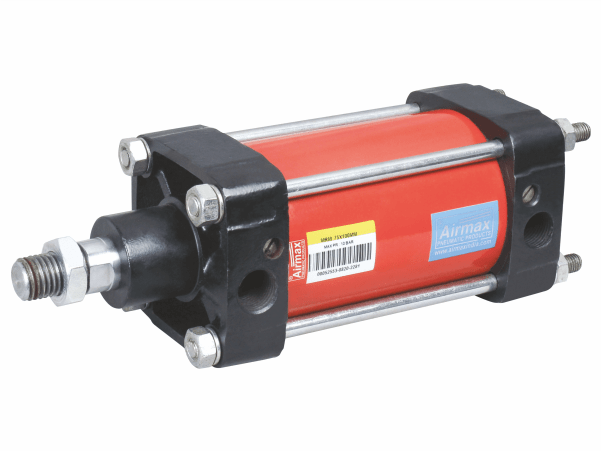
Inside the pneumatic cylinder actuator, there are parts, for example, the end cap, the cylinder, the cylinder pole, the cylinder barrel, the wiper seal, the pad sleeve, and the seal. Some pneumatic cylinder actuators are single-acting and can be worked with a button. The air will then, at that point, move the cylinder pole outward when the button is pushed. The pneumatic frameworks used the air which has been packed to make the rotating or the straight movement and ability to accomplish the work. The pneumatic cylinder actuator is the sort of gadget which resembles the pneumatic framework, using compacted air to drive the cylinder inside the cylinder to make the power or the movement that is required.


Sorts of Pneumatic Cylinder Actuator


● A single-acting pneumatic cylinder actuator :


A single-acting pneumatic cylinder actuator is furnished with one port, where the air will enter and push the cylinder is only one heading. After the cycle, the cylinder will get back to the unique situation by a spring prepared in the framework. A single-acting pneumatic cylinder has a stroke length that is restricted. Involving the single-acting pneumatic cylinder actuator for more slow operations is better. The pneumatic cylinder actuator likewise doesn't utilize a ton of air which will, thusly, accomplish more noteworthy productivity and have lower working expenses.


● A twofold acting pneumatic cylinder actuator:


A twofold acting pneumatic cylinder actuator then again has two ports. These two ports work the other way. The ports will permit the strain to be applied, so the cylinder can be pulled the other way from the one made by the primary port. These activities are at times alluded to as the in-stroke and the outstroke. As a rule, on the off chance that the pneumatic cylinder actuator is bigger, the more prominent the power can be yielded.


Utilizations of Pneumatic Cylinder Actuator


The pneumatic cylinder actuator can be applied to many businesses. For instance, they can be used in the computerization frameworks of the manufacturing plants. The pneumatic cylinder actuator can likewise be utilized in tasks, for example, bracing. During the time spent bracing, the workpiece will be stood firm on the right footing by the jaws which are worked by the cylinder. There is likewise punching, it is where the push from the single-acting pneumatic cylinder actuator can be utilized to mark an article.


Understanding the Basics of Pneumatic Valves: A Comprehensive Guide

Embark on a journey into the fascinating realm of pneumatic systems, where the power of compressed air drives a myriad of industrial applica...