Tuesday, 4 October 2022

Where are single-acting pneumatic cylinders used?

Pneumatic cylinders are a clean and practical choice for accomplishing dependable straight movement in numerous modern conditions. Since they are lighter weight and have lower support than their water-driven and electric partners, they are a superb decision in applications from plant computerization and transportation to bundling and life sciences. Two fundamental styles exist single-acting and double-acting. In single-acting pneumatic cylinders, the air is provided through one port side of the cylinder, making the cylinder pole reach out in one bearing for an undertaking, for example, lifting an item or squeezing one item into another. The opposite side of the cylinder vents air to the climate. Development the other way happens most frequently through a mechanical spring, which returns the cylinder bar to its unique or base position. Double-acting pneumatic cylinder highlight two ports that supply packed air to both expand and withdraw the cylinder pole. Double-acting plans are undeniably more normal all through the industry, with an expected 95% of utilizations utilizing this cylinder style. Be that as it may, in specific applications, the single-acting sort is the most practical and proper arrangement. Here we will investigate where single-acting pneumatic cylinders are a solid match.
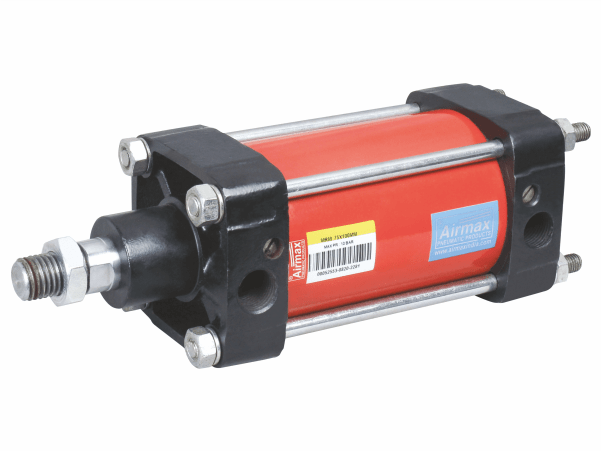


It is additionally useful to consider the benefits and disadvantages of this cylinder style to figure out where single-acting cylinders are a proper choice. In the addition to the side are their minimized size, straightforward plan, and diminished valve and tubing costs contrasted with their double-acting partners. Additionally remember that air utilization is half not exactly that expected for an equivalent measured double-acting cylinder, supporting their proficiency and bringing down their working expenses.


Detriments are likewise essential to know about, to decide whether any of these variables is a major issue for a specific application. To start with, the side of the cylinder that houses the return spring is vented to the encompassing climate, which could permit the entrance of unfamiliar particles and lead to diminished cylinder life. Second, spring activity can become conflicting and lead to ensuring the finish of stroke situating over the long haul. What's more, bore size and cylinder stroke are both confined because of restrictions in spring size and accessible power. At long last, a slight decrease in push can be anticipated because of the contradicting spring force. In light of these elements, single-acting pneumatic cylinders have a restricted stroke length yet are many times valuable in additional conservative and more slow tasks.


Single-acting cylinders are much of the time found in plant robotization settings, performing position, for example, materials taking care of and bundling tasks. Here they are utilized to situate parts and apparatuses, assisting with undertakings, for example, bracing and punching. They can likewise be tracked down in specific siphons and water-driven rams, helping with occupations like lifting weighty things. Pushing, pulling, lifting, and bringing down are different activities these single-acting cylinders can help with. Generally, single-acting pneumatic cylinders are exceptionally productive, straightforward, strong, and simple to introduce, settling on them a phenomenal decision for dependable direct movement in the right application.

Why Do I Need an Air Regulator?

 Air regulators are pneumatic gadgets that get air at any strain inside its resistance, and afterward, administer air of tension no more prominent than their planned result. As such, air comes in at a higher strain, and withdraws at a lower tension by and large. For the reasons for this article, all that precedes the air standard is 'upstream', and all that after it is 'downstream.'


Air flows from an air blower someplace upstream, and it could conceivably communicate with other upstream components. At the point when it arrives at the air regulator, an arrangement of springs and an inward stomach 'stands up against the approaching air, offering sufficient obstruction that main a set volume of air (and hence, a set air pressure, since air pressure is determined by volume inside a given region) moves downstream. Inasmuch as the upstream strain is sufficient to open the stomach, and adequately not to detach the air regulator from the gadget out and out, the downstream tension will be consistent paying little heed to how the upstream strain changes.


This is an immensely indispensable capability, in light of the fact that numerous pneumatic chambers would be hurt by excessively strong air, or at the exceptionally least the positions the chambers are doing would be done ineffectively assuming they were done excessively fast. For instance, without an air regulator, a pneumatic chamber connected to a cautiously adjusted burden could shock up excessively fast and upset the heap it was lifting.


The air blowers have an 'endpoint' at which they quit compacting air, all things considered, permitting the air previously packed into their supply to accomplish the work. Air regulators will make the upstream framework back up with the end goal that the upstream tension will ultimately develop and cause the blower's limit to set off, halting the pressure until that high-pressure air has gotten an opportunity to manage the regulator enough that the air blower restarts — yet the downstream strain from the regulator never shows signs of change until the whole framework is closed down and the stomach at last closes.


Airmax Pneumatic is the leading high-flow air regulator manufacturer in India. We offer various types of industrial valves and cylinders like pneumatic Valves, Pneumatic Cylinders, and many more. 


Tuesday, 23 August 2022

The 6 Things Engineers Should Know About Pneumatic Filters, Regulators, and Lubricators

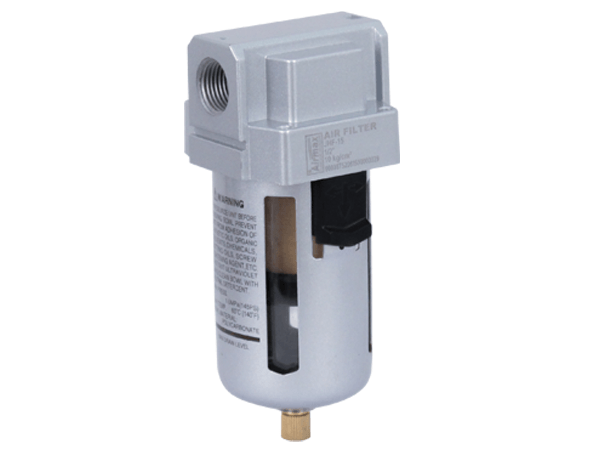
Channels, controllers, and lubricators (FRLs) are the uncelebrated yet truly great individuals of pneumatics. Albeit not generally so stylish as the valves, manifolds, chambers, and actuators that control machine movement, the FRLs assume a basic part of underway performance. Also, shut-off and lockout valves are presently important for FRL gatherings and add determination intricacy. FRLs likewise assume a key part in machine security while adding well-being valves for safe exhaust and security against unforeseen beginning up. Picking the right gadgets and applying appropriate upkeep rehearses diminishes forthright expenses, broadens FRL administration life, and guarantees gear works to detail.


Besides, the most recent patterns in machine computerization show that air readiness units are assuming more noticeable parts as key parts. More refined FRLs measure basic factors like a stream, pollution, and strain — involving the information for additional information investigation and independent direction.


FRLs, for example, this ASCO Numatics 651/652/653 Series air readiness complex, are much of the time the forgotten pieces of a plant's pneumatic framework, yet they hugely affect machine effectiveness and efficiency.


Airmax Pneumatic Ltd is the leading frl unit for compressed air manufacturer in India. We offer various types of industrial valves and cylinders.


FRL 101:The Basics


FRLs give point-of-purpose control of air tension and neatness in pneumatic organizations. They are found upstream from the directional control valves, complex, chambers, and actuators. Practically every pneumatic gadget requires some sort of air arrangement and tension control.


The present FRLs utilize secluded parts that are put in line in one gathering. Regularly, after the shutoff valve, the channel is the primary part of the airline; then the controller; lastly, the lubricator.


Channels are accessible in various assortments to allow them to eliminate oil, particulates, water, and scents from compressed air. Particulate channels eliminate particles from the air stream and are accessible in pore sizes of 5, 25, and 40 microns. Mixing channel pore sizes are more modest, going from 0.01 to 1.0 microns, to separate dampness and oil drops that can affect pneumatic performance. Adsorption channels, albeit seldom utilized, utilize enacted carbon to take out smells and leftover oil fume in the air.


Lubricators are introduced to present modest quantities of clean oil very high stream. The oil cleans and safeguards downstream parts from wear and consumption.


Controllers set the approaching air strain to the ideal level for the chambers and actuators' working hardware. Since tension in the plant's air drops regularly and differs, a steady strain guideline is fundamental to guarantee proper machine response times and velocities. The controller is regularly set somewhat underneath the least plant air supply pressure. Managing the right tension for the application additionally permits clients to streamline energy utilization.


The ASCO Numatics 653 Series of air readiness items from Emerson allows clients to control additional items from a similar Filter-Regulator or Lubricator (FRL), or diminish pressure drop across the framework, the two of which can save energy and expenses.


FRLs: Six Key Criteria


There are six key measures engineers should consider to guarantee they get the best FRLs requiring the least upkeep:


The working climate. The working climate has a major effect on which FRL is chosen. Fundamentally, the FRL's parts utilize suitable materials and development. In the first place, will the gathering be found inside or outside? If outside, think about the scope of the working temperature. Outrageous hot or cold circumstances require parts with high-or low-temperature appraisals. Oil rig parts and others presented to the seas should endure saltwater consumption. If inside, scathing or substance conditions request the FRLs utilize various sorts of seals or are mounted inside defensive nooks.


Appropriate strain determination. Is your plant's air-supply pressure a typical 125 psig or less? Or on the other hand, is it a high-pressure framework? Most FRL parts are intended to deal with pressures up to 145 psi in standard sizes and arrangements. In any case, some plant air supplies are appraised at up to 250 PSIG. That implies a high-pressure controller and channel ought to be determined. Some new FRLs handle up to 300 PSIG.


Oil. Do your pneumatics require a lubricator? If you conclude your machine's pneumatic valves and chambers require grease, a lubricator will be required in the FRL get-together. The grease additionally behaves like a cleanser in the air framework. As you constantly grease up, the wipe oil cleans out foreign substances that would make the valves and chambers stick. In the case of utilizing this methodology, a 5-micron particulate channel is typically adequate.


If the pneumatics don't need grease, both particulate and it is proposed to blend channels. The combining channel helps eliminate the impurities the ointment would clean out.


Closure valves. Lockout valves are habitually expected on a machine's pneumatics. These parts vent the air off hardware and are regularly worked physically or electrically. At the point when initiated, these valves guarantee no parts downstream of the FRL will get air. The goal is to debilitate air from the machine on the off chance that there is a mechanical jam or on the other hand on the off chance that an administrator enters the region.


Shutoff or separation valves (low-stream exhaust) are introduced on the upstream side of the FRL get together while lockout valves (high-stream exhaust) are introduced downstream.


Lockout valves come in fast exhaust or delicate beginning speedy exhaust renditions. With the present measured design, it is not difficult to add shutoff, disengagement, as well as lockout valves to the FRL gathering. Adding these gadgets is an application-explicit choice and ordinarily directed by hardware parts.


Right air stream. The air stream rate is a significant thought in choosing FRL parts. Designers ought to guarantee the FRL is appropriately measured to match the expected machine air stream. Precisely computing a machine's air-stream necessities is intricate and difficult for most gear fashioners. Not entirely settled by the air volume expected to fill and deplete the pneumatic part and required reaction times.

Saturday, 25 June 2022

What Is a Pneumatic Cylinder Actuator?

 Pneumatic cylinder actuators don't weigh a lot. They don't need a lot of support. They produce less power and have a somewhat slow speed when contrasted with pressure-driven frameworks or electric frameworks. All things considered, they are a savvy elective.


How does the pneumatic cylinder actuator function?


Inside the pneumatic cylinder actuator, there are parts, for example, the end cap, the cylinder, the cylinder pole, the cylinder barrel, the wiper seal, the pad sleeve, and the seal. Some pneumatic cylinder actuators are single-acting and can be worked with a button. The air will then, at that point, move the cylinder pole outward when the button is pushed. The pneumatic frameworks used the air which has been packed to make the rotating or the straight movement and ability to accomplish the work. The pneumatic cylinder actuator is the sort of gadget which resembles the pneumatic framework, using compacted air to drive the cylinder inside the cylinder to make the power or the movement that is required.


Sorts of Pneumatic Cylinder Actuator


● A single-acting pneumatic cylinder actuator :


A single-acting pneumatic cylinder actuator is furnished with one port, where the air will enter and push the cylinder is only one heading. After the cycle, the cylinder will get back to the unique situation by a spring prepared in the framework. A single-acting pneumatic cylinder has a stroke length that is restricted. Involving the single-acting pneumatic cylinder actuator for more slow operations is better. The pneumatic cylinder actuator likewise doesn't utilize a ton of air which will, thusly, accomplish more noteworthy productivity and have lower working expenses.


● A twofold acting pneumatic cylinder actuator:


A twofold acting pneumatic cylinder actuator then again has two ports. These two ports work the other way. The ports will permit the strain to be applied, so the cylinder can be pulled the other way from the one made by the primary port. These activities are at times alluded to as the in-stroke and the outstroke. As a rule, on the off chance that the pneumatic cylinder actuator is bigger, the more prominent the power can be yielded.


Utilizations of Pneumatic Cylinder Actuator


The pneumatic cylinder actuator can be applied to many businesses. For instance, they can be used in the computerization frameworks of the manufacturing plants. The pneumatic cylinder actuator can likewise be utilized in tasks, for example, bracing. During the time spent bracing, the workpiece will be stood firm on the right footing by the jaws which are worked by the cylinder. There is likewise punching, it is where the push from the single-acting pneumatic cylinder actuator can be utilized to mark an article.


Sunday, 19 June 2022

The Pneumatic Valve - How Does it Work? An Overview of Different Pneumatic Valve Types and How They Operate.

 What is a pneumatic valve?


Pneumatics is a framework that involves a distinction in a strain of packed gas or air for its activity. Such plans contain various instruments through which packed gas is dispersed. Altogether, they go about as an incorporated framework.


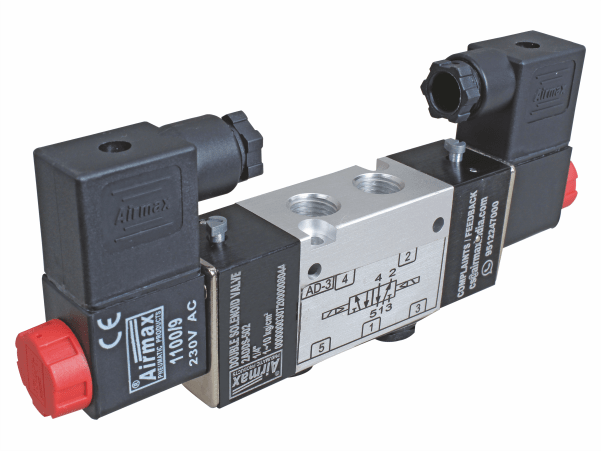
Valves are utilized to control, appropriate and coordinate the stream in this construction. They play out a directing and dosing capability using locking and managing components. In this manner, pneumatic valves go about as a middle person between the source (blower) and actuators (like pneumatic actuator, pneumatic chamber) in pneumatics.


Such units are driven by unique signs. The accompanying sorts of signs have some control over pneumatic valves:


  • Electromagnetic

  • Pneumatic

  • Mechanical


Electromagnetic pneumatic valves are constrained by attractive fields on loops and solenoids. Their functioning guideline is very basic. Flow from an outside electrical source is provided to the curls. Collaboration between the attractive field in the curls and solenoid makes the valve stem move.


Pneumatically worked valves are ordinarily constrained by the very flow of packed air that works in the pneumatic framework. Its presence or nonattendance influences their work in specific circumstances.


Mechanical pneumatic valves are driven by mechanical power, for instance, utilizing a switch. There are numerous choices, for instance in 90-degree steps or a quarter turn renditions. Most frequently, they perform basic assignments (opening/shutting).


Notwithstanding the primary classifications, gadgets with a joined control are likewise produced. In certain valves, the control performs physically, for instance, simply utilizing a button.

Pneumatic Valve Types and Plan


The primary qualities that decide the sort of valve are various flowlines (ports) and conceivable component positions. These numbers are in every case demonstrated in the valve attributes.


For instance, a 4/2 pneumatic valve implies that it has four ports and two potential spool positions. Pneumatic valve wiring chart photograph


The utilization of the sign between the numbers isn't managed and it very well might be picked by a maker (4/3, 4-3, and so forth.). The most well-known models in pneumatic frameworks are valves with a 3/2 and 5/2 plan.


Every one of the openings and its groups is intended for explicit capabilities. Their primary design is to withdraw and broaden the medium and exhaust.


There are two sorts of valves as per the underlying place of the spool compared with the flow:


  • Ordinarily open

  • Ordinarily shut


An ordinarily shut valve intends that in the underlying state its segment is shut (wind current is obstructed). At the point when a sign is given, the valve opens, and in this manner opens the segment of the line.


A regularly open valve at first has an open flowline (wind current moves uninhibitedly) and closes it when a sign is given.


Likewise, gadgets might vary in the manner in which they return to their unique situation after finishing the work. There are two types: Spool valve scheme


  • Monostable

  • Bistable


Mono-stable valves return to their unique situation after the end of the sign. This is accomplished utilizing a bring spring back. They need one outer sign to work.


Bi-stable valves stay in the situation in which the outer sign stopped and don't get back to their unique position. To back them to their underlying position, an extraordinary return signal is required. In this manner, such classification requires two outer signs to work (on/off).

Pneumatic Flow Control Valve Working Standard


The primary errand of the pneumatic merchant is to change the cross-segment in the pneumatic pipeline, which permits changing and coordinating the flow.


As referenced over, this activity is performed by the locking and managing components.

There are two sorts of segment changes: discrete (on/off) or easily consistent (with customizable boundaries).


Spool


Sliding spool valves are intended to make more complicated flow control tasks. That gear can be utilized in cross-segments with a high flow rate and a muddled circuit. Spool valves can work in frameworks with 4-5 working lines, as well as in less complex circuits, because of their flexibility. The spool moves opposite the flow pivot.


End: pneumatic valves are the primary controllers of compacted air and gas flows in pneumatic frameworks. Because of their wide assortment, they can perform different confounded and straightforward undertakings in the flow heading control. Every one of the valves has its extraordinary plan.


Airmax Pneumatics Ltd is one of the best & experienced pneumatic valve manufacturers in India. Airmax pneumatics have a wide range of pneumatic cylinders, valves & accessories.

Wednesday, 8 June 2022

Why Is Cushioning in Pneumatic Cylinders Important?

 Padding is certainly not another idea in liquid power, however, it is a critical one as it can impact the lifetime and execution of machines. Padding is generally expected in cylinders to decelerate the heap the cylinder is moving. Without it, the cylinder can strike the cylinder's end cover. The power of this effect can cause shock, vibration, and motions that reach out to the remainder of the machine. These adverse consequences can upset cylinder precision, make an abundance of commotion, and rashly wear the cylinder and its parts. End padding diminishes the cylinder's pace of movement before the cylinder strikes the end cover, lessening the influence of shock and partial pressure.

What is cushioning? 


Padding can take a few structures. You can utilize outside safeguards, basic effect padding with a versatile guard, worked in pneumatic padding, or a mix of padding advancements.


For padding to work really, the degree of padding should be ideally adapted to the given application. On the off chance that there's insufficient padding, the effect shock is higher when the cylinder stirs things up around town cover with direct unfortunate results to a lifetime of the cylinder and mechanical parts appended to it. Assuming there's a lot of padding, it takes the cylinder longer to venture to every part of the length of the cylinder, which then, at that point, adversely influences process duration and lessens machine yield.


While pneumatic padding is appropriately changed, the course of cylinder travel is uniform all through the whole padding arrangement and the cylinder speed is precisely zero when it arrives at the finish of its movement. This is called ideal padding.


To all a more effective picture, ideal padding is accomplished when the cylinder doesn't skip by any stretch of the imagination. At the point when the cylinder doesn't bob, it gives the briefest conceivable stroke time and doesn't pressure the cylinder. End cover contact delivers an insignificant sound, and the complete process duration is streamlined.

Advantages of ideal cushioning


Ideal padding in pneumatic cylinders gives a few eminent advantages.


Ideally changed cylinders can increment efficiency as well as save expenses and energy. By limiting cylinder shock, vibration, and motions in the framework, ideal padding broadens the functional existence of the cylinder and its parts. This brings down support, machine margin time, and substitution costs. It likewise establishes a calmer workspace for administrators and further develops complete working process duration. Decreased process durations increment end-client efficiency, which gives OEMs an upper hand.


Another key advantage is more prominent accuracy, especially in pick-and-spot applications that require outright exactness when the cylinder arrives at its end position.

How to achieve ideal cushioning  


To upgrade the degree of padding for a particular application, you'll have to affirm a couple of cylinder boundaries. These are working strain, load mass, and cylinder speed. On the off chance that appropriately estimated for the application, every cylinder has one ideal padding setting for a given mass and working tension. Notwithstanding estimations for these boundaries, you'll likewise require the pneumatic cylinder manufacturer padding diagram or the pneumatic cylinder manufacturer's internet-based computation framework.


When you have the estimations, the initial step is to guarantee that the cylinder speed compares to that predefined in the padding graph or the web-based computation framework.


The cylinder speed should be accurately changed for each situation. You'll come by the best outcomes by introducing stream control valves straightforwardly in the association ports in the finishes of the cylinder. This gives a free delta stream while permitting you to change the power source tension by adjusting the region of the exhaust port with a changing screw. Or on the other hand, you can utilize directional control valves with vital restrictors all things considered.


It's memorable's vital that any change to working strain, mass, and speed requires padding rearrangement. When padding is great, these consistent state conditions ought to remain something similar. It's additionally critical to recollect that precise end padding change takes insight, instinct, and, now and again, persistence.


Additionally, remember that in certain applications, the ideal pad is simply not feasible because of the inborn plan of the machine or application. Be that as it may, as a rule, the pad execution can in any case be worked on following the means above.


How to achieve ideal cushioning faster and easier


There are additionally useful padding change instruments that remove a portion of the mystery from the ideal finish of stroke padding. Sensor electronic instruments, similar to the AVENTICS Cushioning Adjustment Tool (CAT), make end padding change faster, easier, and more exact. In only a couple of simple tasks, you can guarantee your pneumatic cylinder end padding is changed by the right settings. An additional advantage is that changes are reproducible, paying little mind to outer impacts.


To utilize the CAT, you simply attach the sensor to the cylinder and switch it on. Then, you can see all capacities on a huge LED show and change as needs are. The discretionary AVENTICS application (Android/iOS) can graphically give extra data about cylinder speed and padding attributes, as well. While the padding is great, you're given a go-ahead. The presentation shows a traffic signal that moves from red to yellow to green as you change and demonstrates in which course to change the pad screw to further develop pad execution.


Saturday, 4 June 2022

Compact Pneumatic Cylinders Can Play Big Roles in Automation

 Today, minimal pneumatic cylinders are the essential system for straight activation when space is restricted. Oftentimes referred to as short-stroke cylinders, these gadgets are accessible with bore sizes going from 0.5 to 4 inches and standard strokes going from 0.0625 to 4 inches.


The first Pancake has an exhausted body plan. Today, minimized cylinders are likewise presented in a regular tie-bar and spacer setup, with round, square, and expelled body plans.


Reduced air cylinders have a cylinder pole setup (rather than rodless cylinders). Cylinder bar cylinders work in two ways: twofold acting and single-acting.


Twofold acting cylinders utilize packed air to control both the broaden stroke and the withdraw stroke (moving the pole to and fro). This plan makes the twofold acting cylinders ideal for moving around loads. Normal applications for twofold acting smaller air cylinders include collecting, bowing, bracing, taking care of, shaping, lifting, bringing down, situating, squeezing, handling, punching, shaking, and arranging.


With single-acting cylinders, compacted air is provided to just a single side of the cylinder. The opposite side vents to the environment. Contingent upon whether air is directed to the cap end of the bar end of the cylinder, the cylinder bar will either broaden or withdraw when the cylinder is incited. The most well-known plan utilizes pneumatic force to broaden the cylinder pole. An interior spring returns the cylinder to its unique position when air depletes. This is commonly called spring return.


In a spring-expand configuration, gaseous tension withdraws the cylinder bar and the spring force makes the pole broaden when strain is taken out. This makes single-acting cylinders ideal when power is required in just a single heading and the return stroke is unrestricted and dumped. These are likewise well known in applications where, for security reasons, a characterized position should be taken in case of a power disappointment.


Regular applications for single-acting, smaller air cylinders include: inciting folds and switches, cinching parts, and catapulting parts.


A solitary bar setup is, by a wide margin, the most well-known air cylinder plan. Nonetheless, twofold bar cylinders are very valuable in numerous applications.


Twofold pole cylinders are utilized:


  • At the point when equivalent relocation is required on the two sides of the cylinder.

  • At the point when the cylinder is expected to perform work on the two sides.

  • At the point when it is precisely invaluable two or three a heap to each end.

  • At the point when the additional end can be utilized to mount cams for working cutoff switches.


Scope of Options

Short stroke cylinders may be smaller in height, however, the quantity of accessible models and standard choices is enormous.


Minimized air cylinders have a significant number of similar kinds of mounts as the bigger National Fluid Power Association (NFPA) and International Organization for Standardization (ISO) exchangeable cylinders. Here is an outline of common short-stroke cylinder mounting types and models.


Centerline mounting is the most well-known choice. The best help for an air cylinder is along its centerline. It is called centerline mounting because the mounting plane is the centerline of the cylinder. This offers inflexible help, yet it requires precise arrangement.


Through-opening mounting is accessible on some short-stroke cylinder models. For this situation, counterbored openings are penetrated through the cylinder body for simple mounting with attachment head cap screws. Nose mounts as well as front and back-rib mounts are likewise presented on an assortment of conservative cylinder styles.


Turn mounting empowers the cylinder to turn through a circular segment. Eye and clevis mounts, as well as trunnion mounts, are accessible on many smaller cylinder models.


Non-centerline mounting is for the most part very tough, yet at times, might be less unbending than other mounting choices. Since the plane of the mounting surface isn't through the centerline of the cylinder, a bowing second is made around the mounting focus. In any case, side carry and foot-mounted minimal air cylinders are once in a while the ideal answer for exceptional applications.


Hostile to Rotation Options


For applications in which revolution and enrollment are basic, nonrotating cylinder plans are accessible. In any case, remember that nonrotating choices on minimal, short-stroke cylinders are for light torsional dealing with and enrollment as it were.


Keeping up with the pole's proper direction can be achieved in more than one way. Inner aide pins are one choice for twofold acting, single-bar cylinders. Two aide pins integrated inside the cylinder go through the cylinder head. These aide pins forestall turn of the pole with a standard resilience of ±1 degree. An elastic circle is incorporated toward the finish of each guide pin to take up end play and immovably seat the pins in the aide openings.


Another choice is to utilize an outer aide block safely appended to the cylinder pole. A couple of steel guide shafts, joined to the aide block, guarantee hostile to turn of typically under 0.8 degrees.


Another choice to forestall revolution is to integrate twin-cylinder poles into the cylinder head. The poles are safely secured to the cylinder and integrated remotely by a device bar at the closures of the poles. The tooling plate guarantees that the bars move pair and gives an ideal mounting surface to connections expected by your application. Device bars are once in a while outfitted with strung mounting openings or counterbored mounting openings.


Numerous Pistons, Multiple Positions


Numerous cylinders are utilized to build the push power of the cylinder. Multi piston cylinders give similar result force as single-cylinder cylinders with a lot bigger bores. Higher powers can be accomplished in restricted spaces versus bigger drag cylinders, which require a bigger impression and a more extensive focus to-focus space when more than one cylinder is required.


If the application requires a conservative cylinder with halfway burden positions, some choices are accessible. At least three pole positions can be accomplished with a solitary cylinder.


Airmax Pneumatics Ltd is the leading Square Pneumatic Cylinder manufacturer in India. We offer pneumatic cylinders.

Understanding the Basics of Pneumatic Valves: A Comprehensive Guide

Embark on a journey into the fascinating realm of pneumatic systems, where the power of compressed air drives a myriad of industrial applica...